










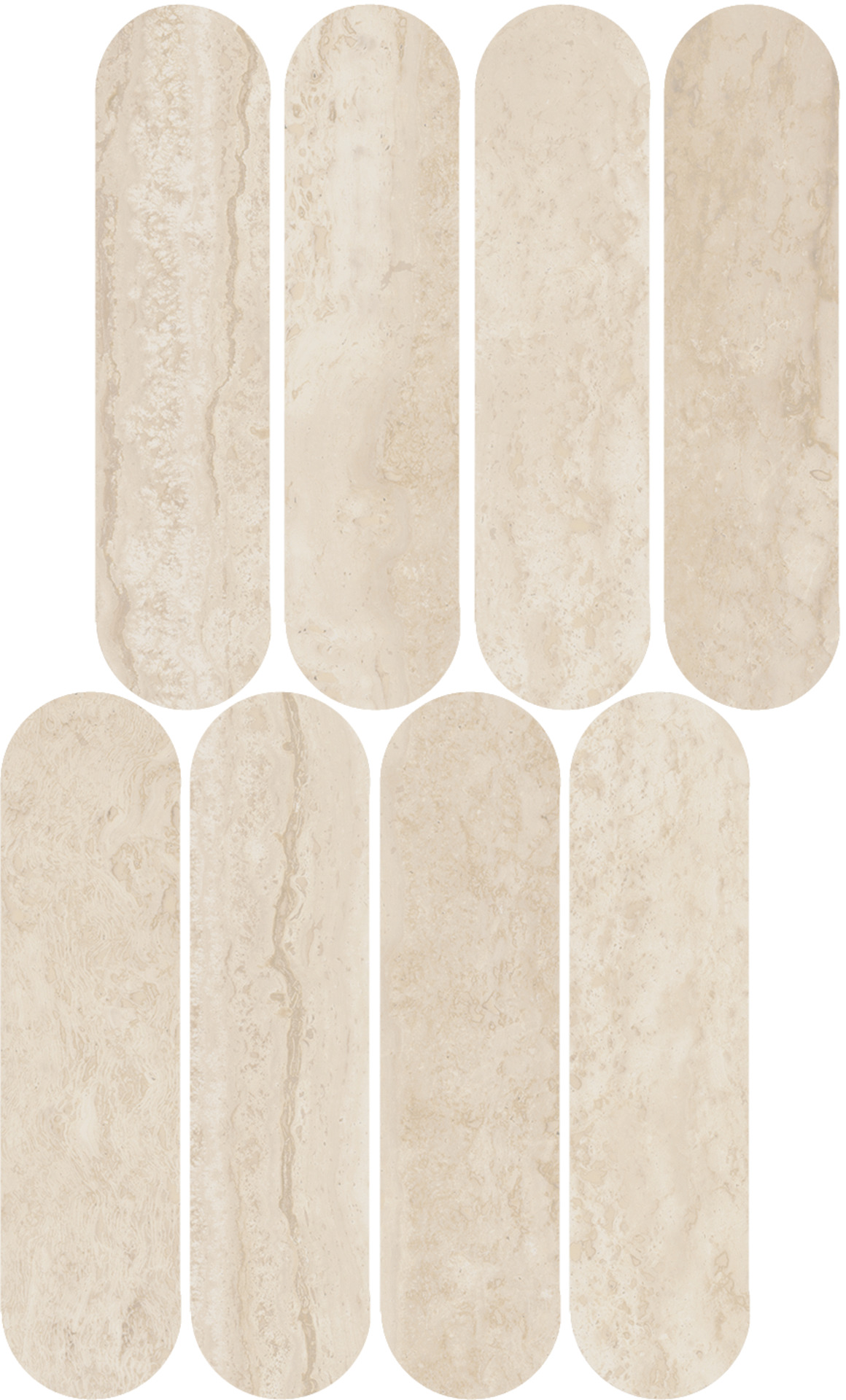

Grande Stone Look
- Colors 37
- Surfaces 5
- Sizes 4





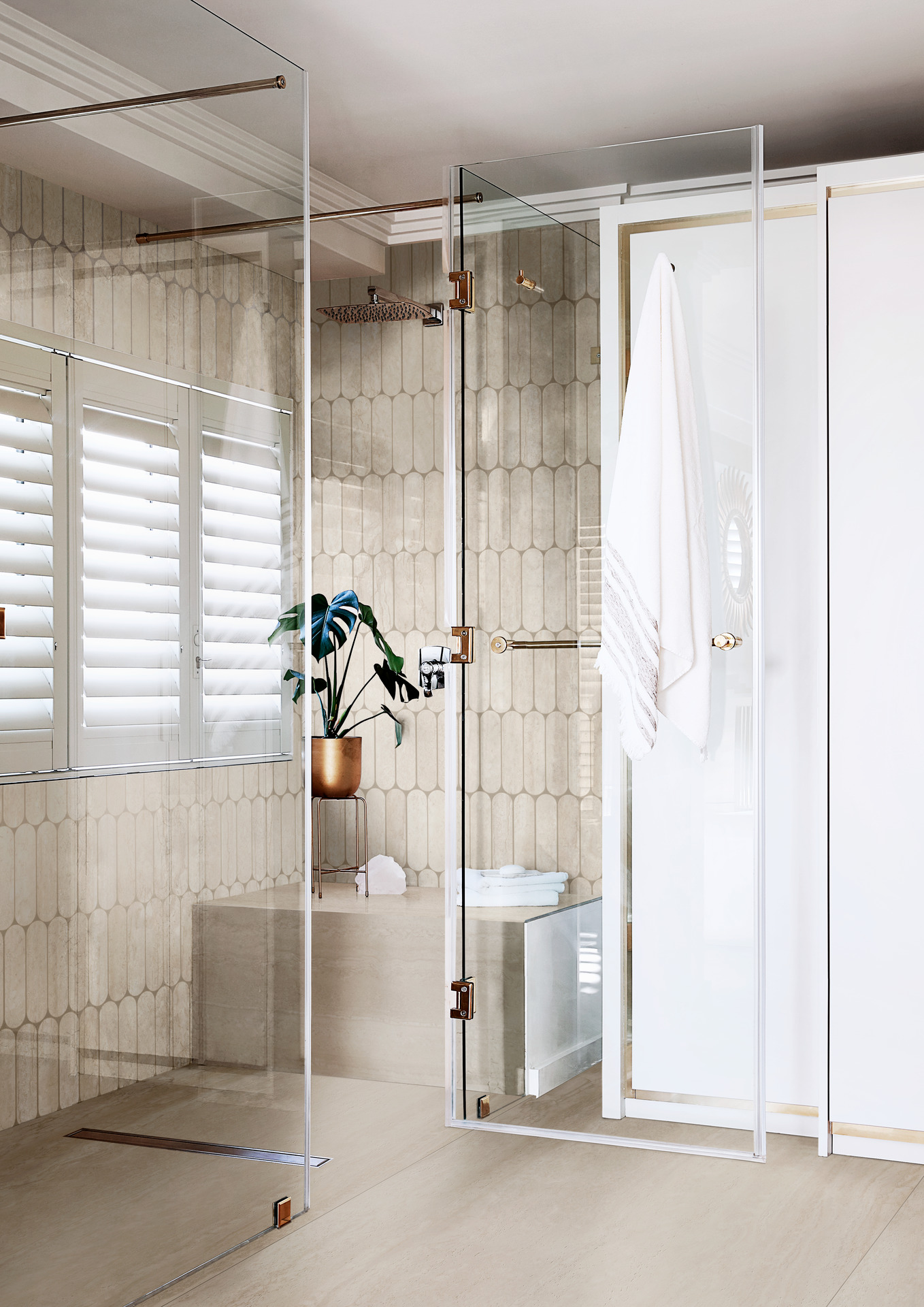
Designing coordinated floors and wall coverings allows you to create more seamless spaces thanks to surfaces that share the same material effect. Discover the Marazzi collections suitable for installation on both floors and walls.

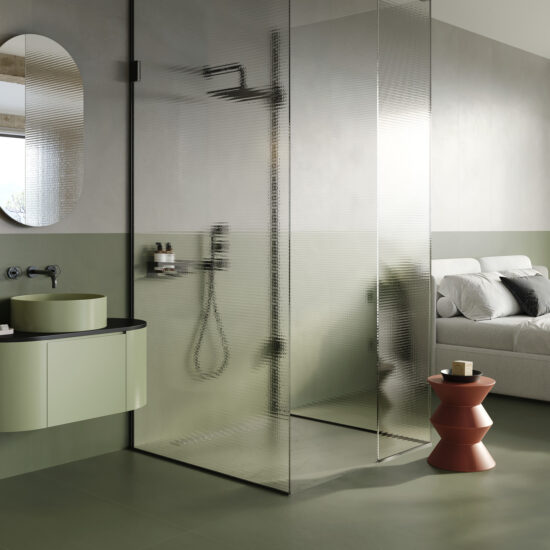
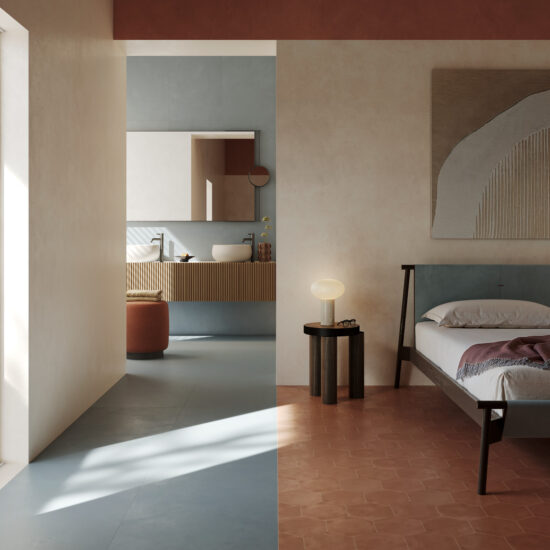
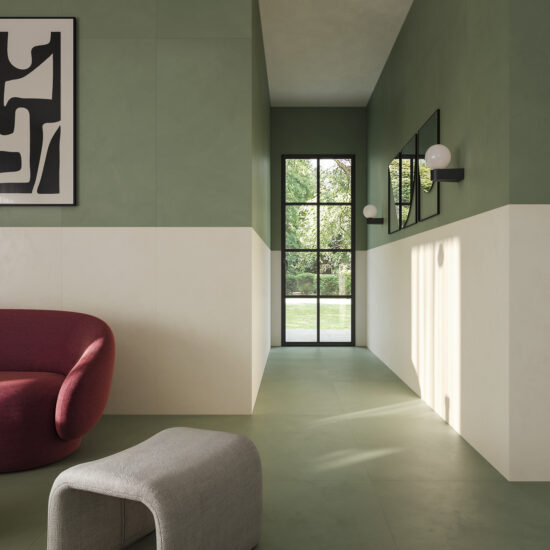

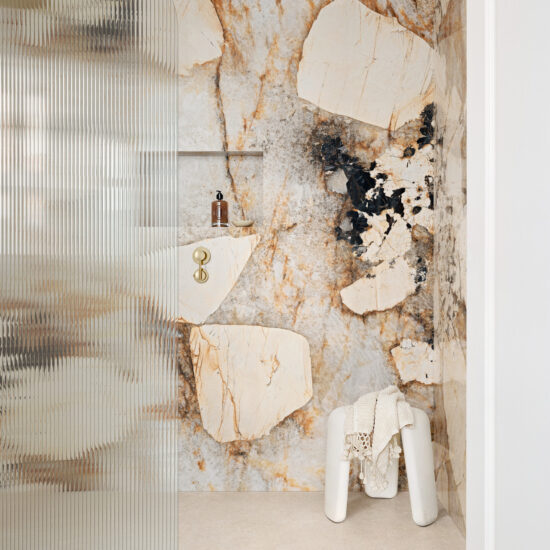
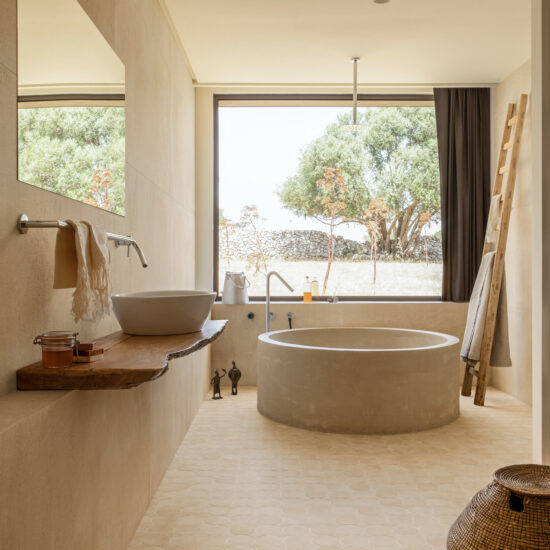
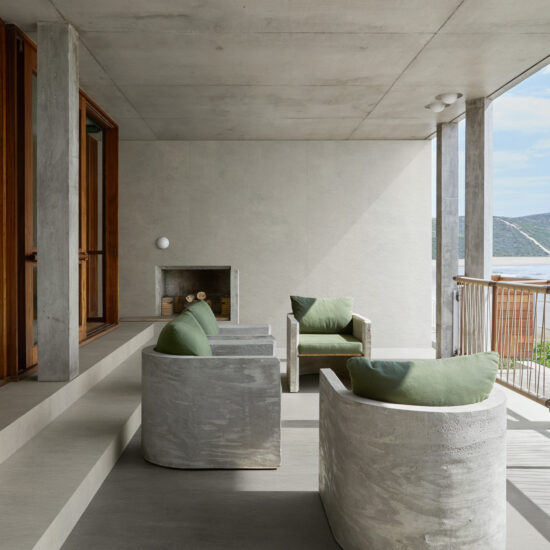


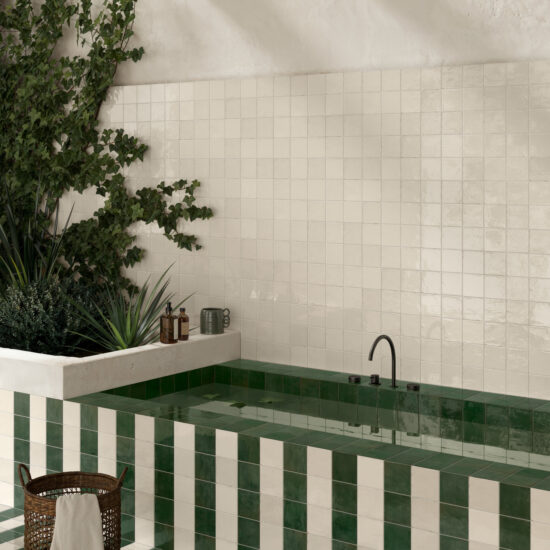

A coordinated design does not necessarily require the floor and wall to be identical in every detail. Continuity can result from the same porcelain stoneware used on both surfaces, or from collections with the same color and effect but different textures, reliefs, or finishes.
When making your choice, it’s best to consider together the effect, color, size and finish, always checking the intended use of each item. Porcelain stoneware can in fact be used throughout the project, from the floor to the wall, while some ceramic wall coverings, such as white-body or thin tiles, are designed exclusively for vertical surfaces.
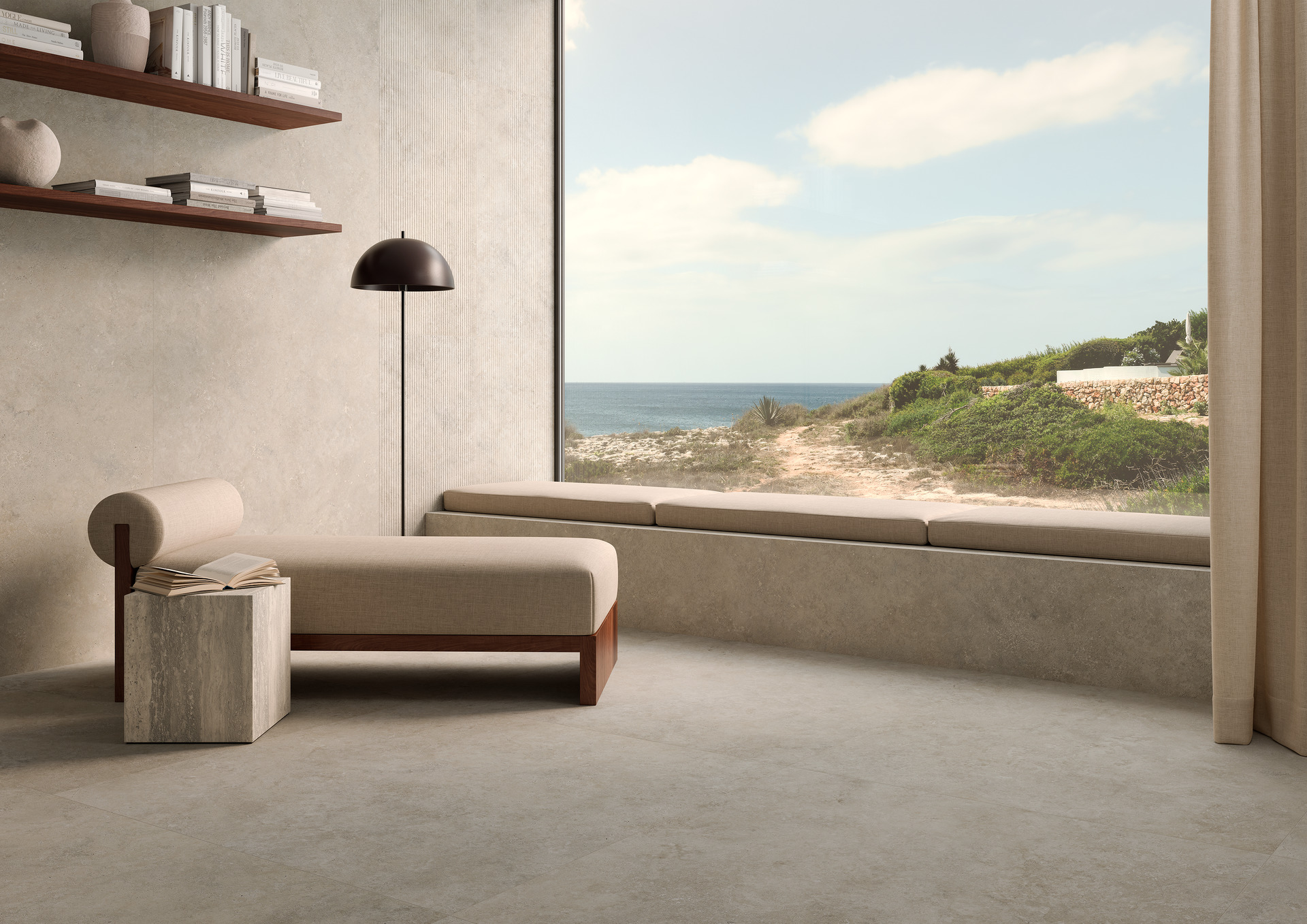
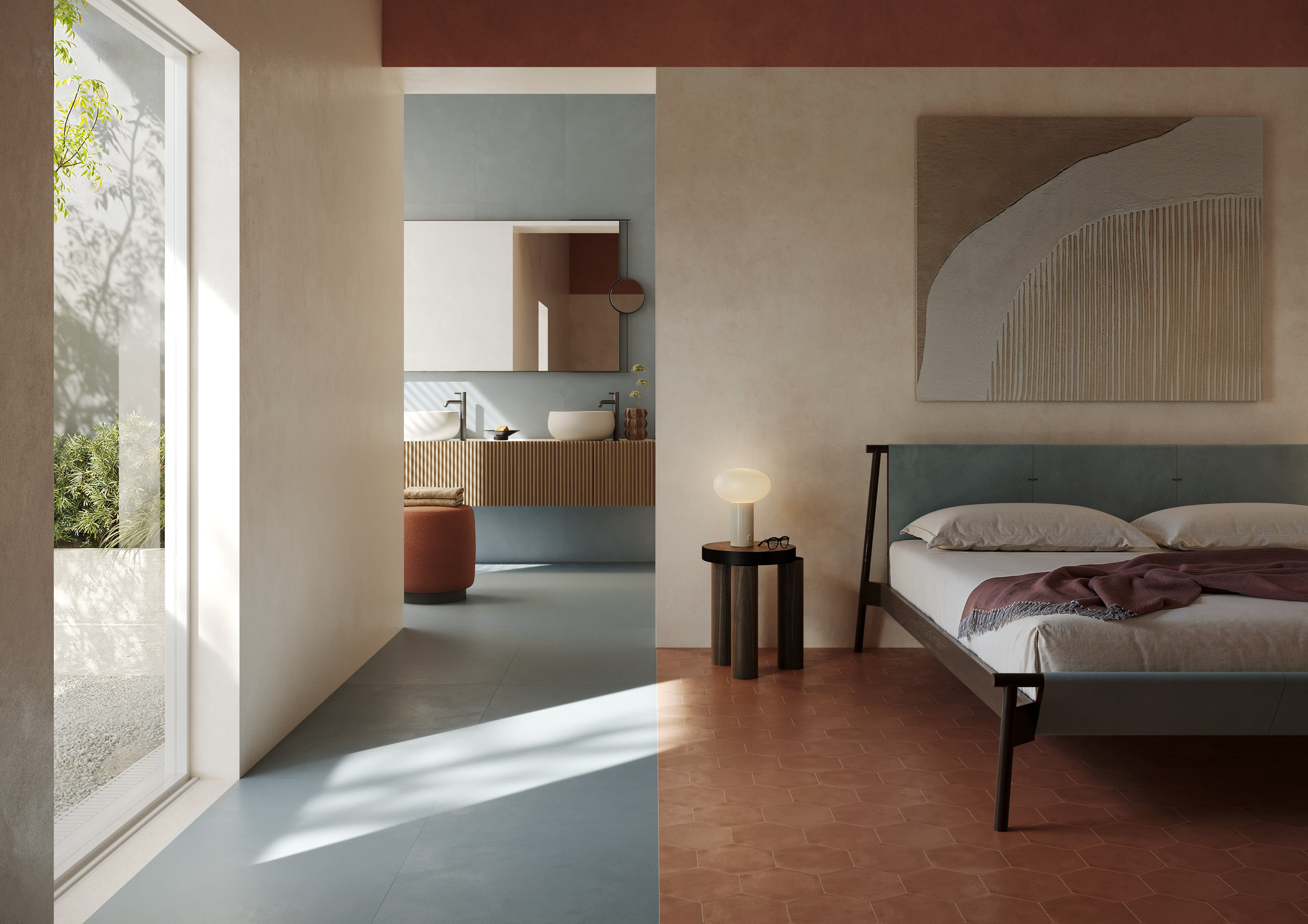
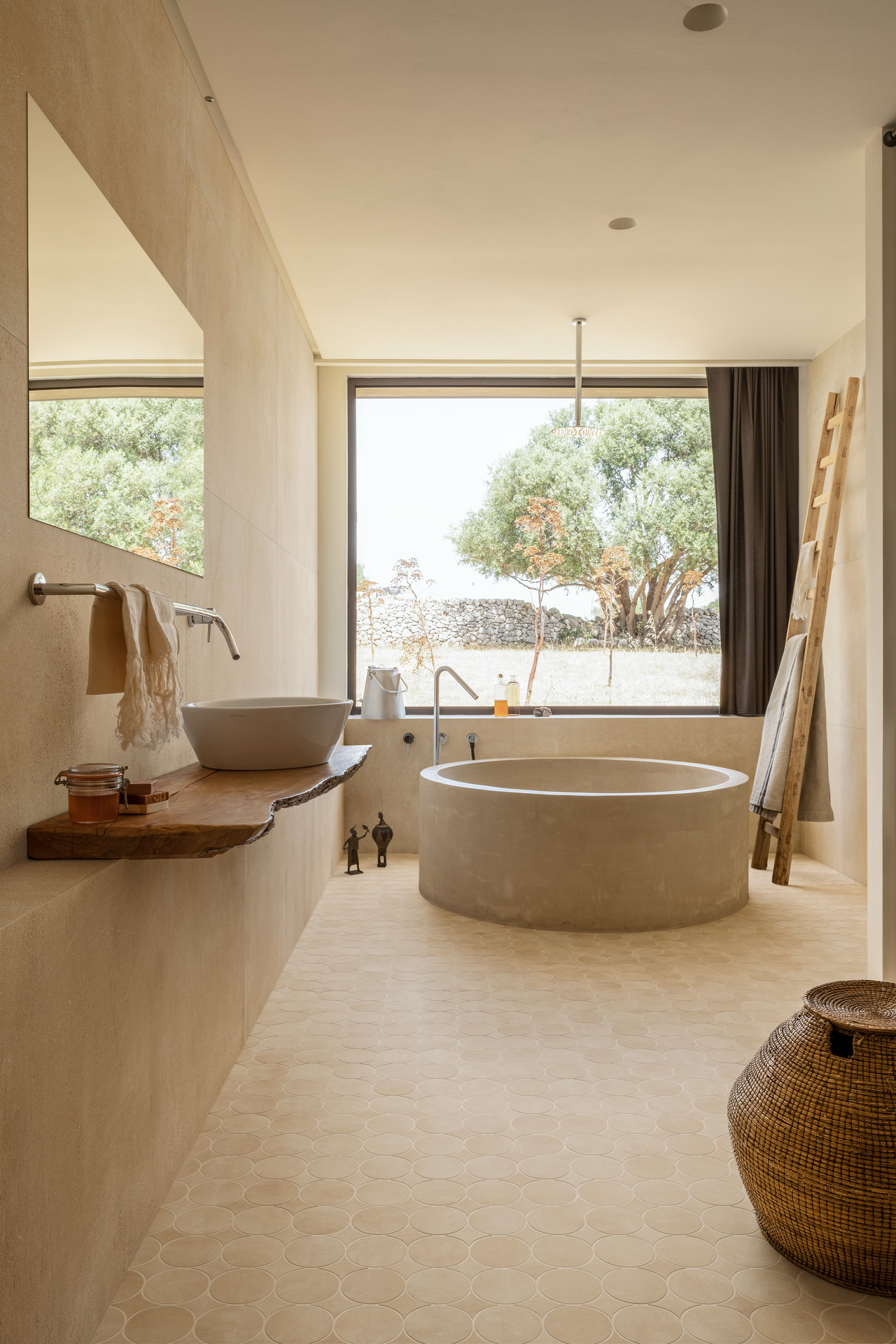
When the floor and walls share the same effect, the visual breaks between surfaces disappear and the space is perceived as a single, larger, and more harmonious volume. This is one of the most effective strategies to make a room look bigger.
Porcelain stoneware remains the same material on both surfaces. The installation method differs between floor and wall, but the visual outcome remains identical.
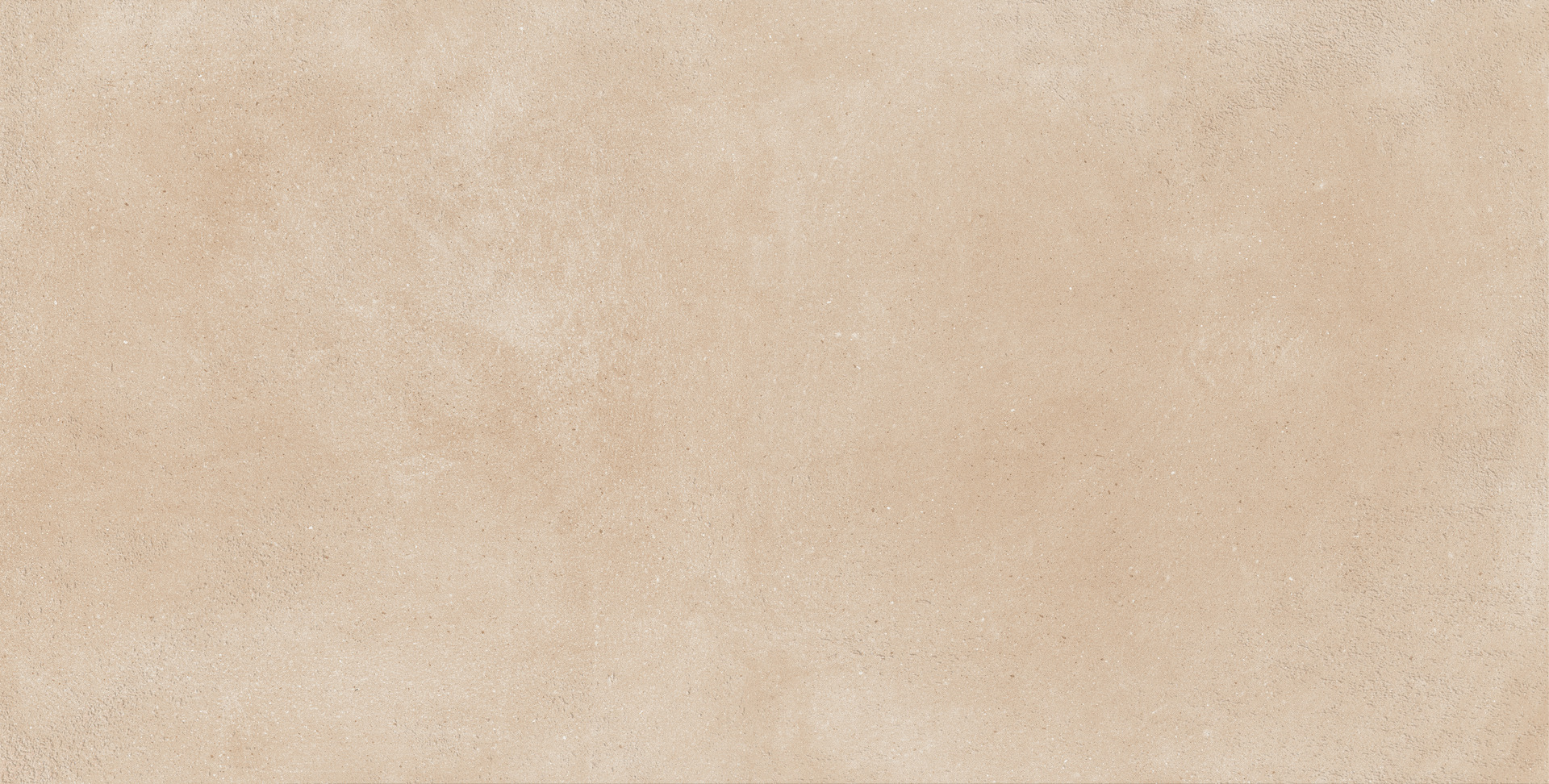
The continuity between floor and wall is possible with any porcelain stoneware effect. It can originate from the substance of thestone effect, the veining of themarble effect, the essential surfaces of theconcrete effect and theresin effect, the warmth of thewood effect or the solid color of plain shades.
What changes is the way it is achieved, depending on the desired result.
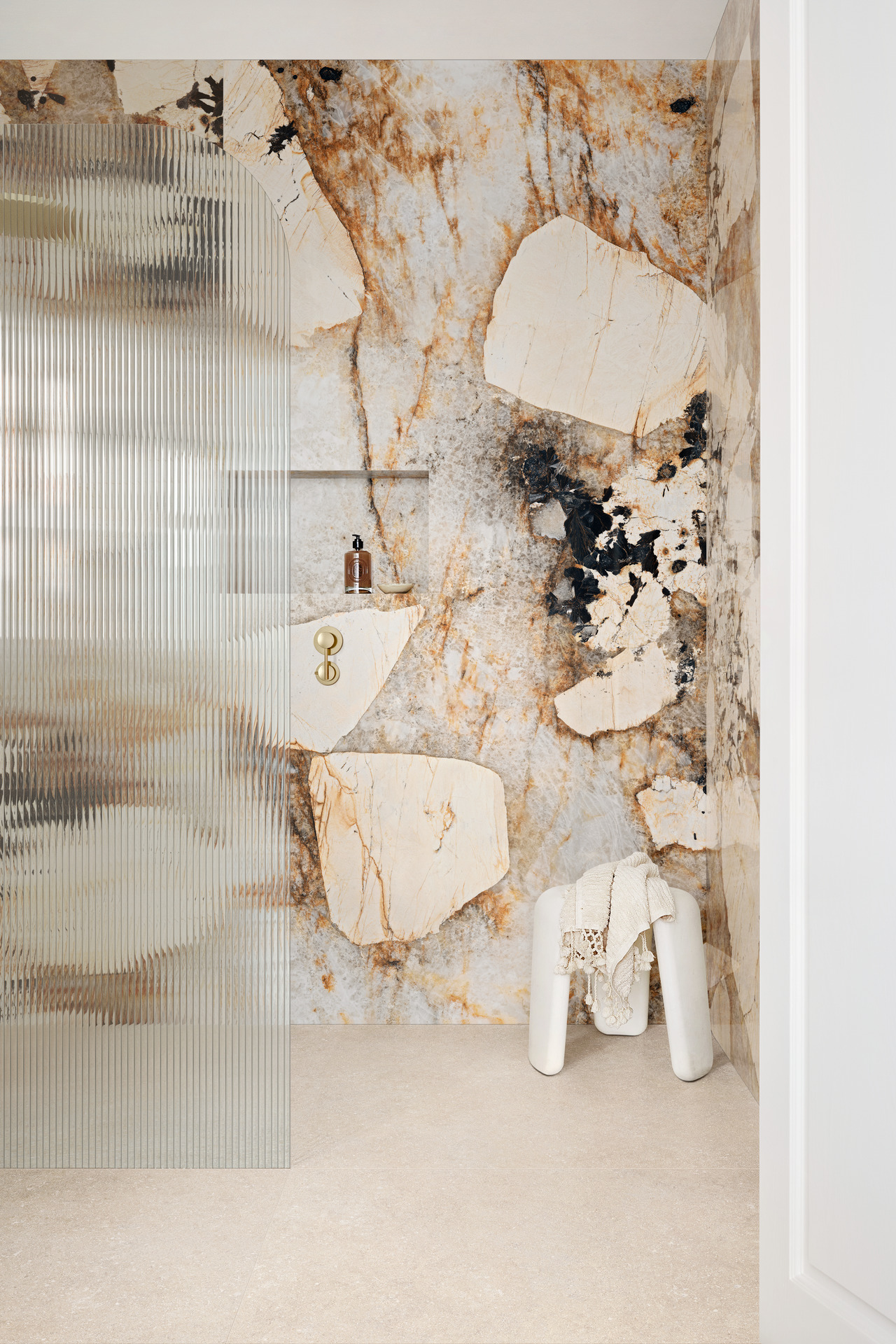
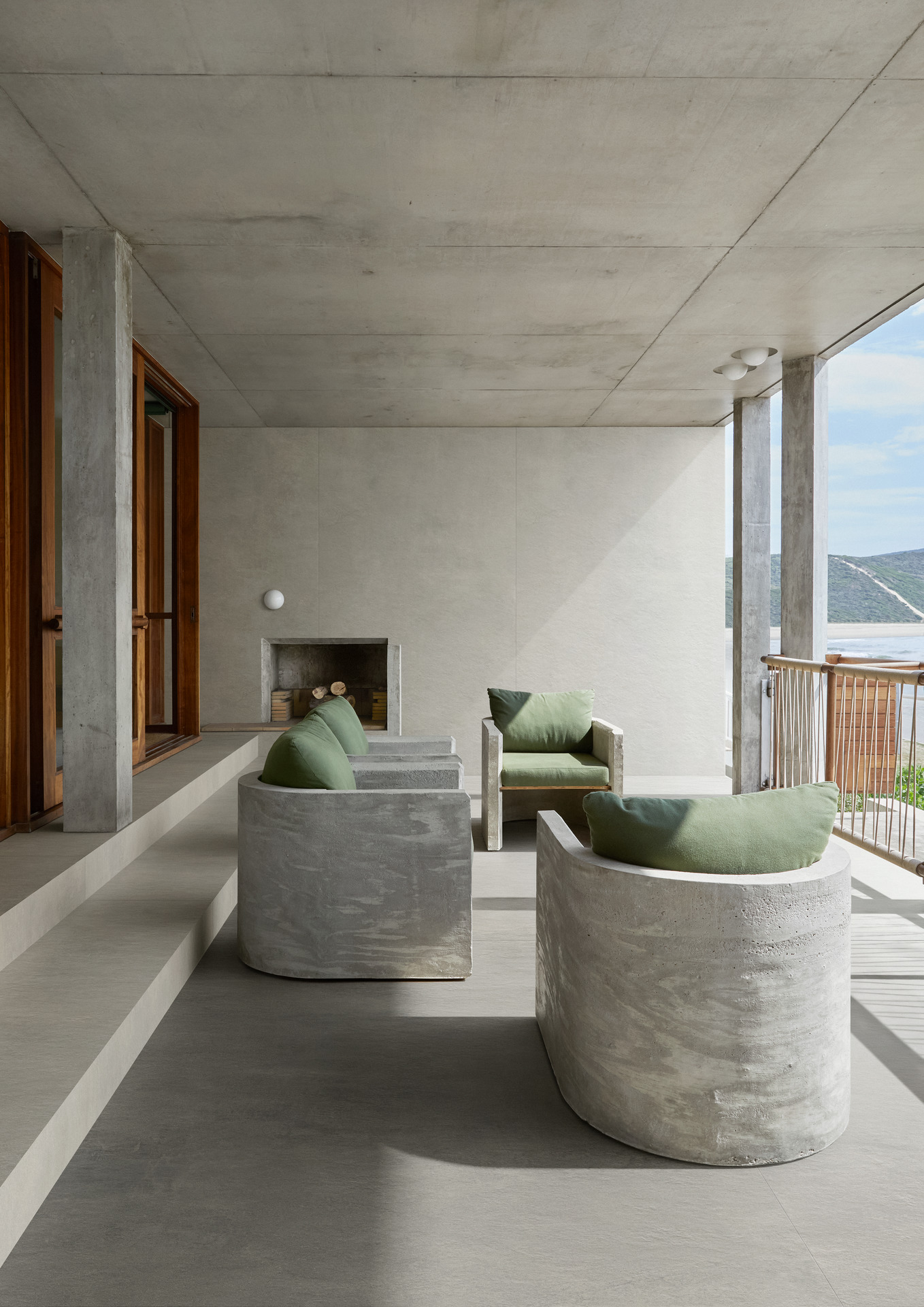
The most direct route to continuity is through large format tiles, which reduce grout lines to a minimum and transform floors and walls into almost uninterrupted surfaces. The slabs in the Grande collection can cover a full-height wall with a single piece and bring the same material from the floor to the wall covering.
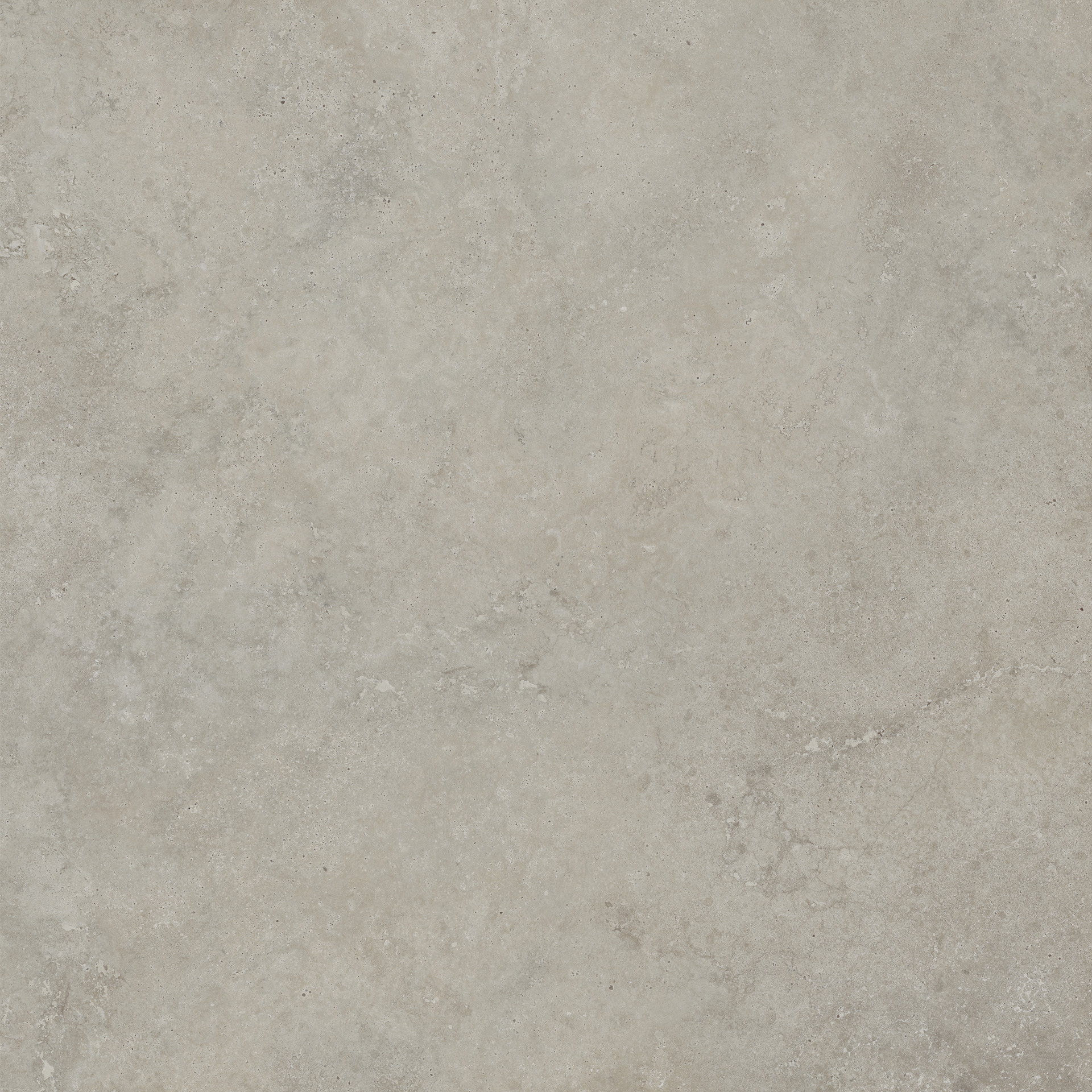
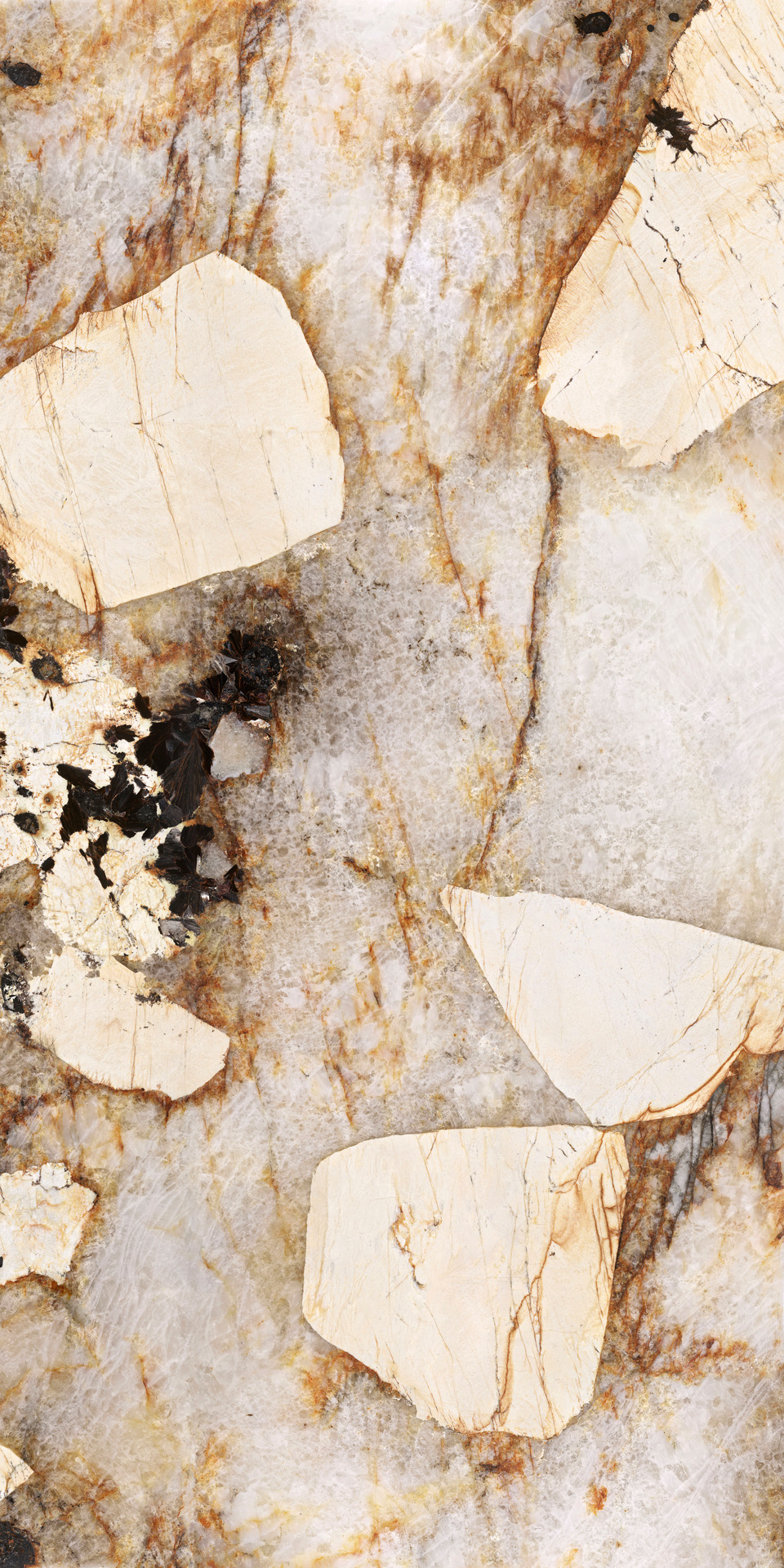
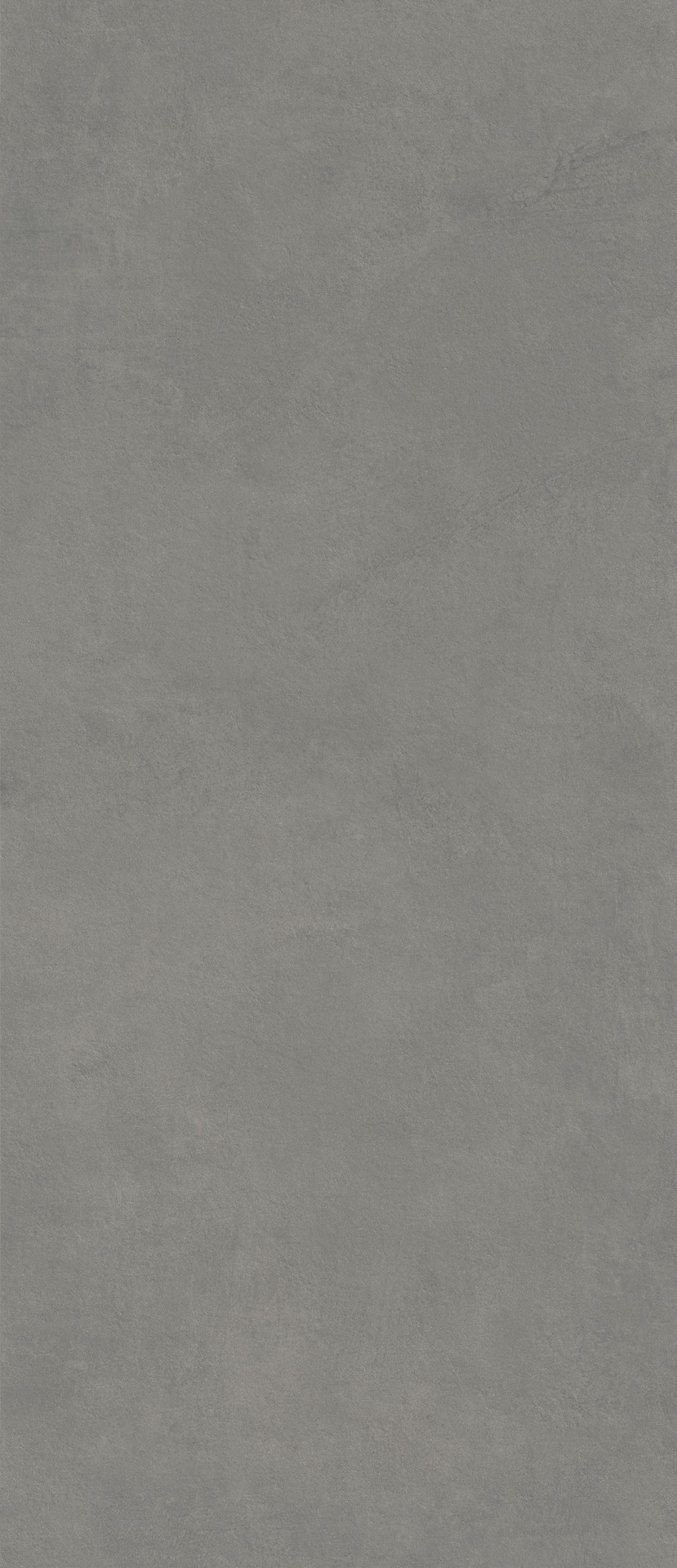
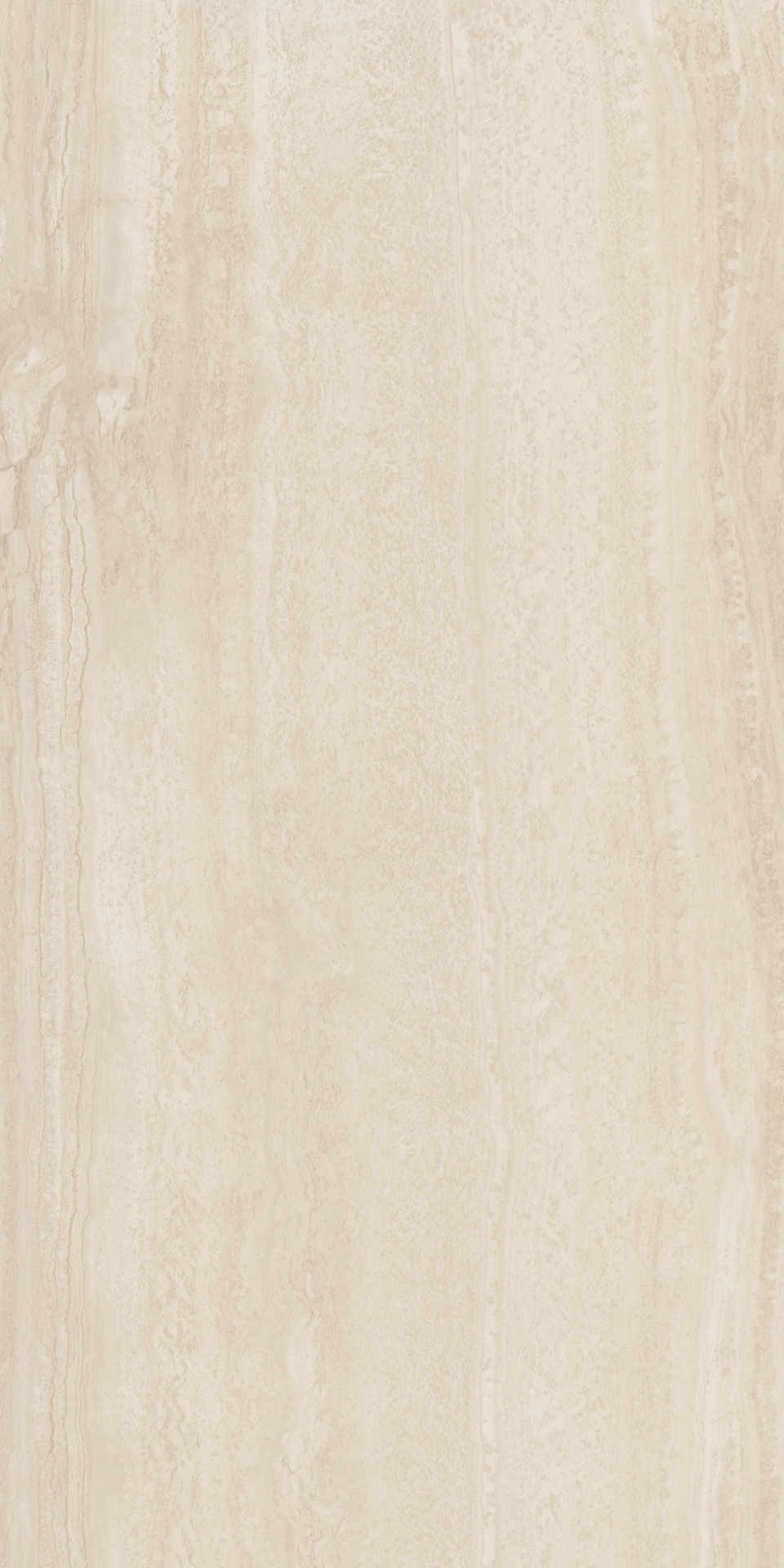
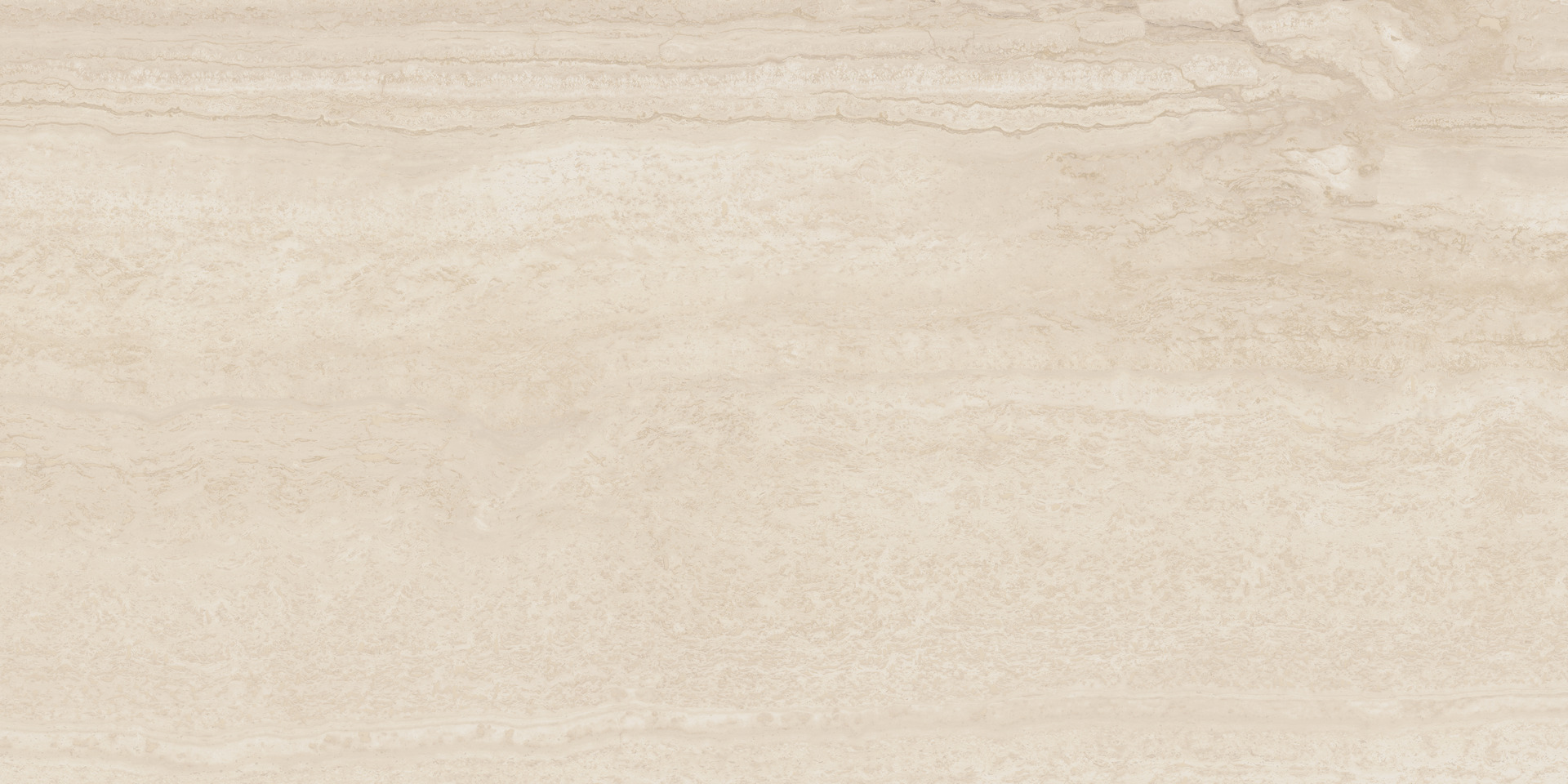
This solution particularly enhances effects such as marble, concrete and stone, where veining, color variations, and textures can develop over larger areas and more fluidly accompany the transition from floor to wall.
Many porcelain stoneware collections can be used both as flooring and as wall covering, allowing you to maintain the same material and effect on both surfaces.
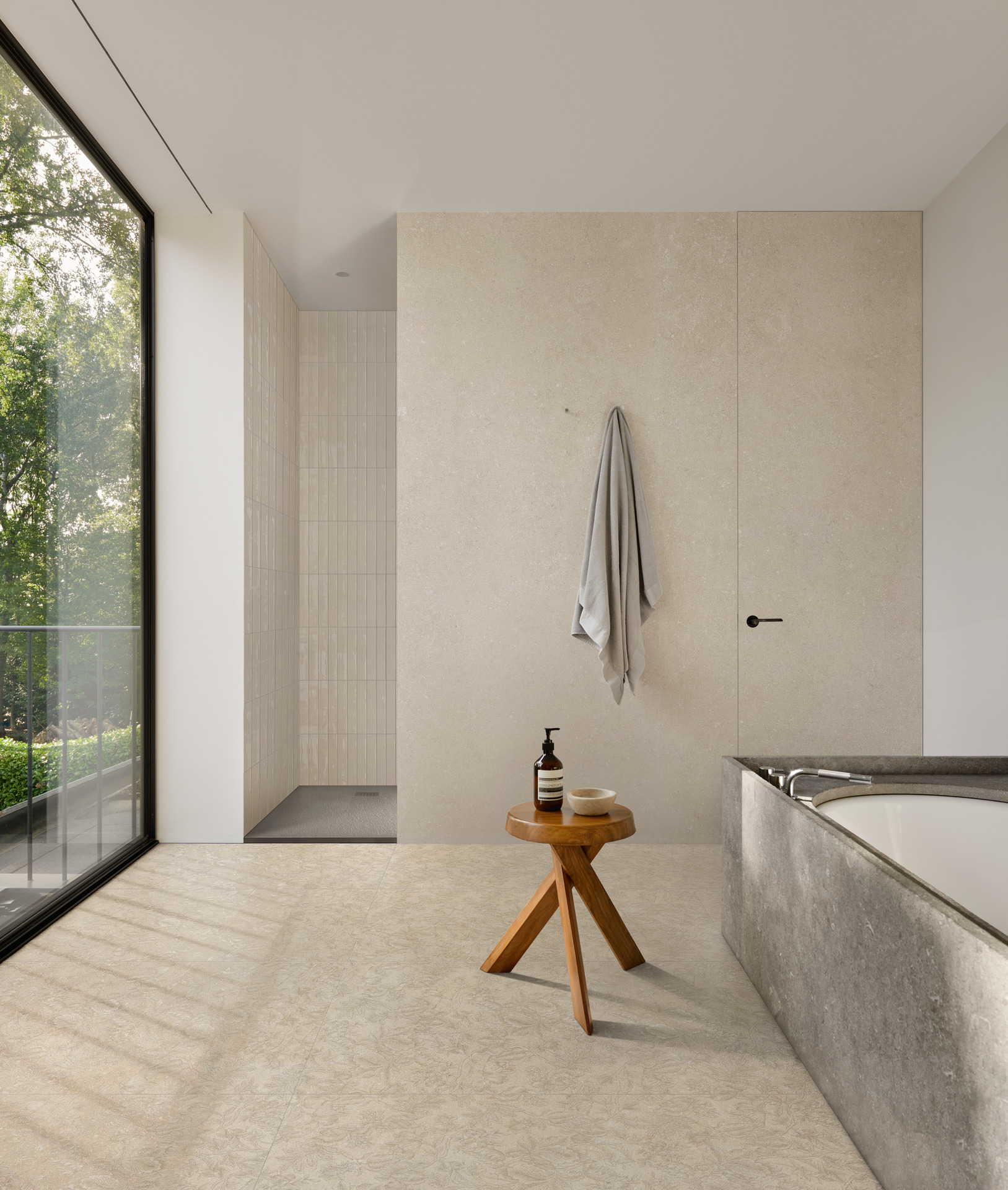
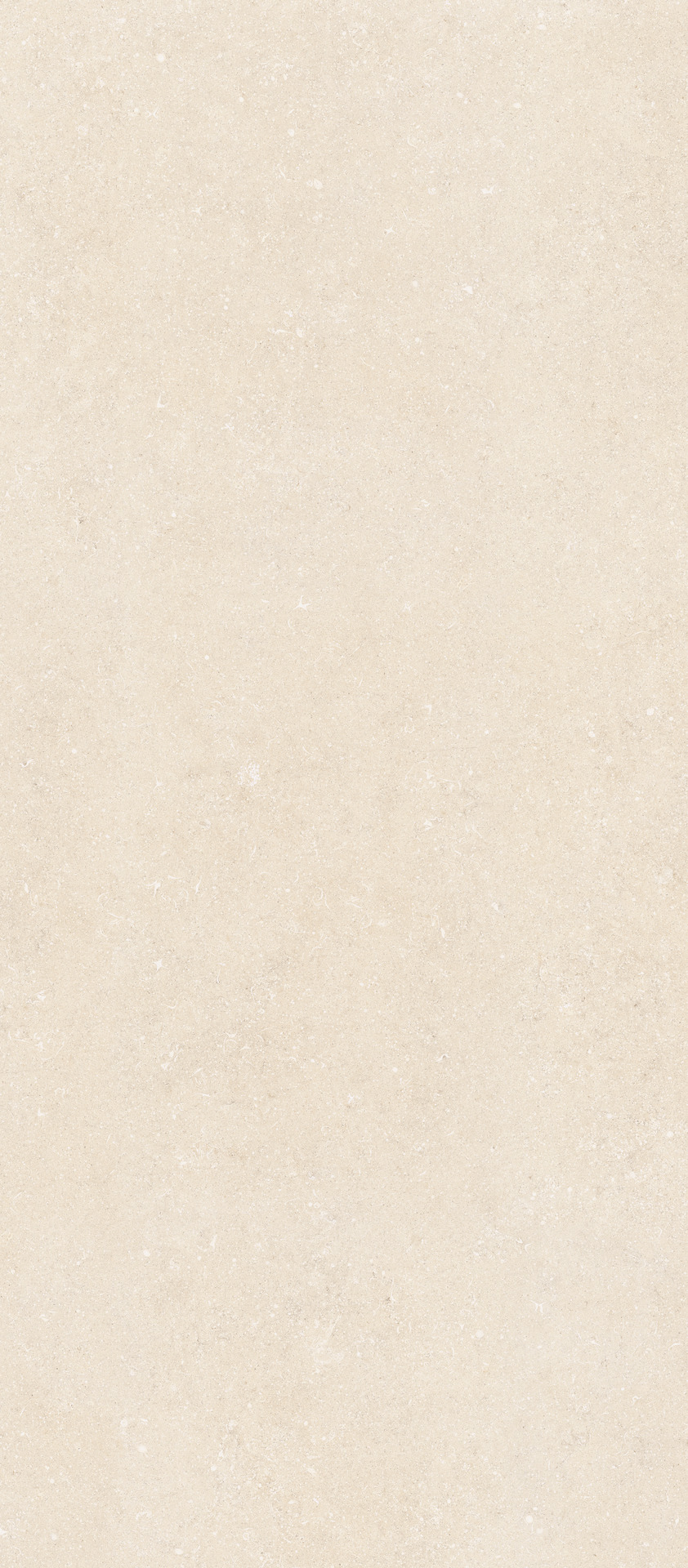
This is the case with Mystone Tivoli, a light and bright stone effect with high-definition 3D graphics and high-resistance surfaces, designed to accompany floor and wall in the same project. Also Mystone Pietra di Sicilia brings the warmth of Sicilian stone to both surfaces, for a cohesive room. With Nobilis the wood effect continues seamlessly: the 3D graphics and synchronized structure allow the warmth of walnut to rise from the floor to the wall.
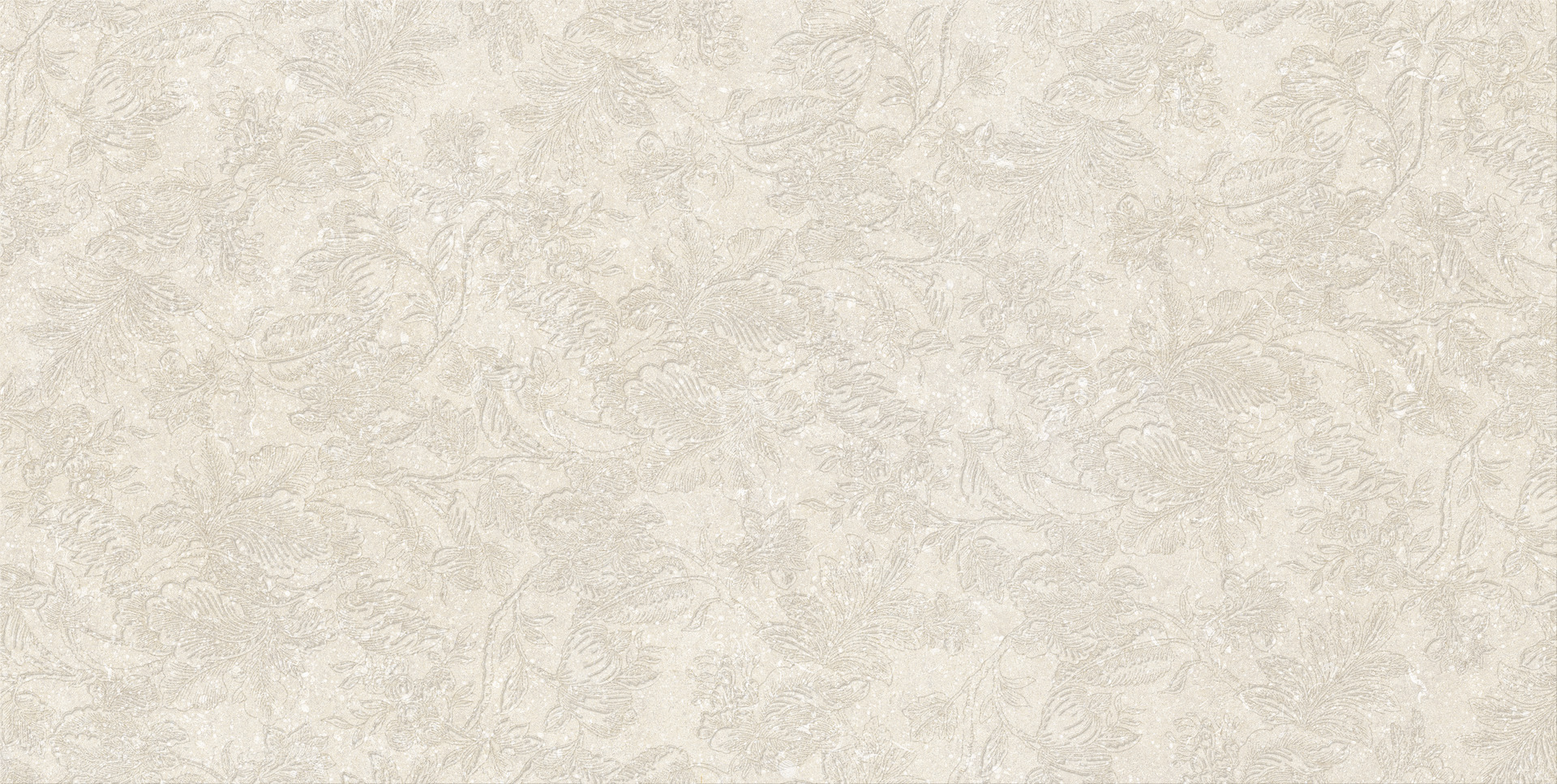
In other cases, the coordinated design comes instead from thecombination of a porcelain stoneware floor and a wall covering from the same aesthetic family. Cementum and Cementum Wall, Mystone Pietra di Sardegna and Pietra di Sardegna Wall, or Campaspero and Campaspero Wall allow you to maintain a common chromatic and material base while introducing on the wall specific textures, reliefs or finishes.
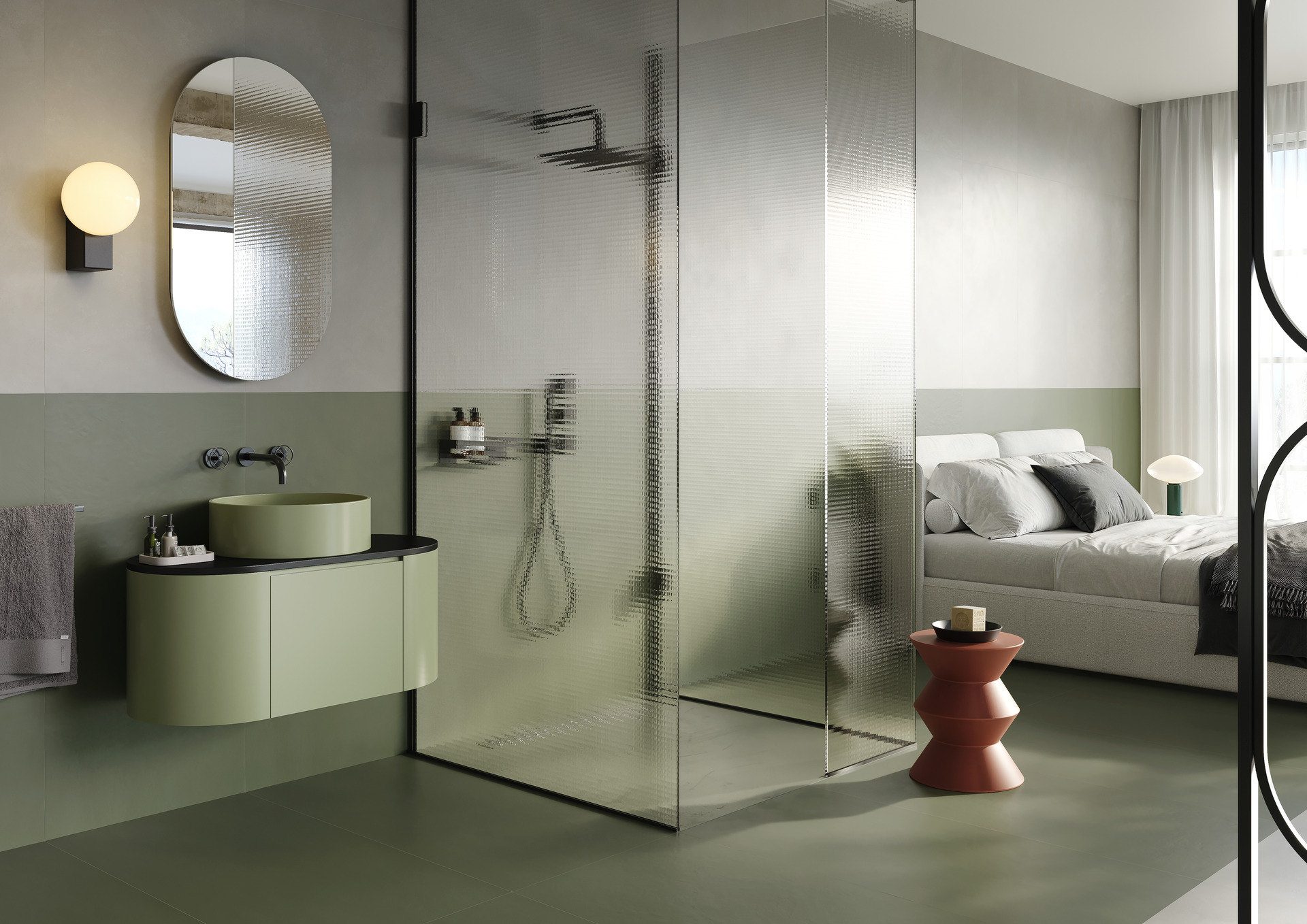
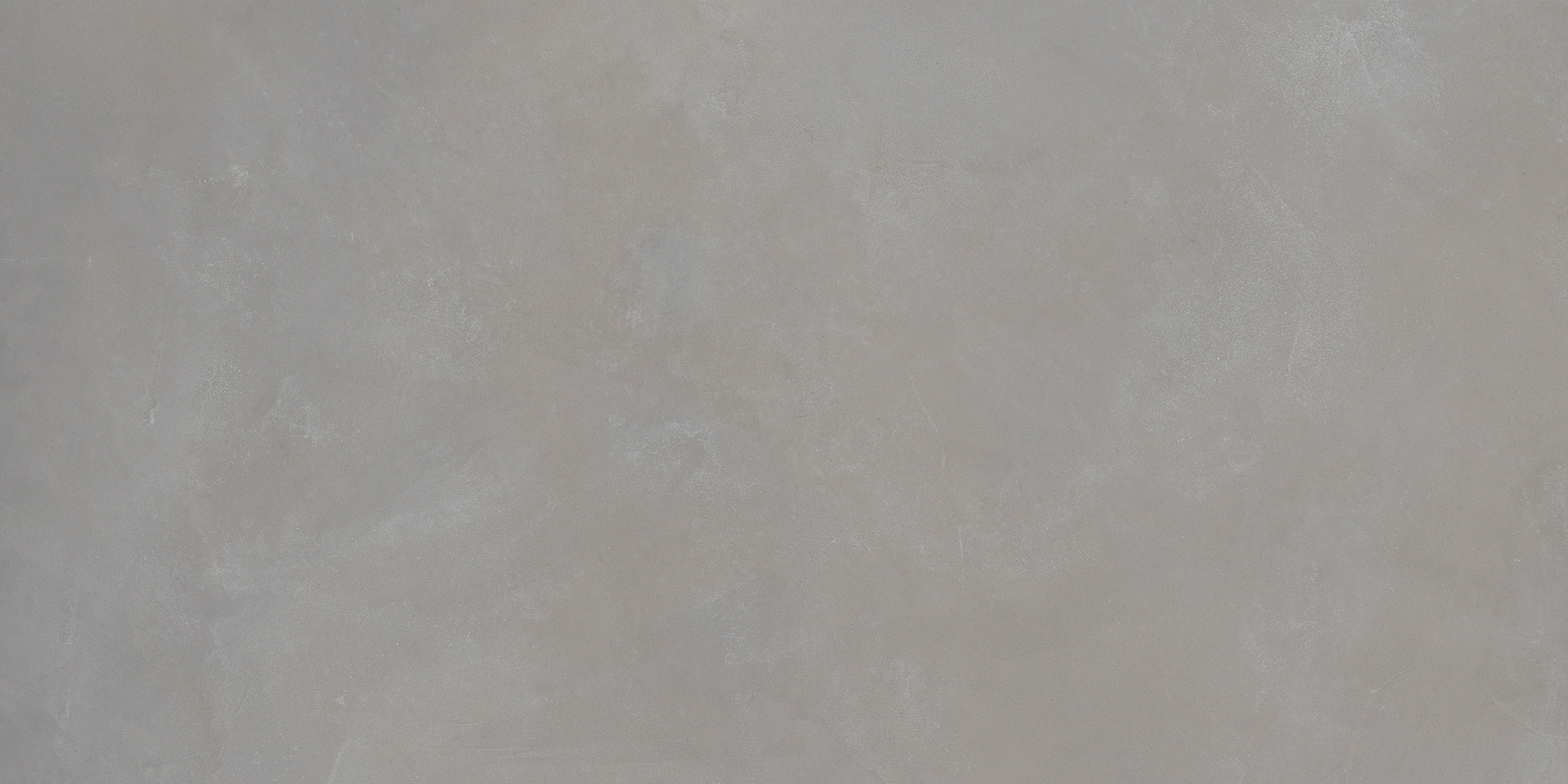
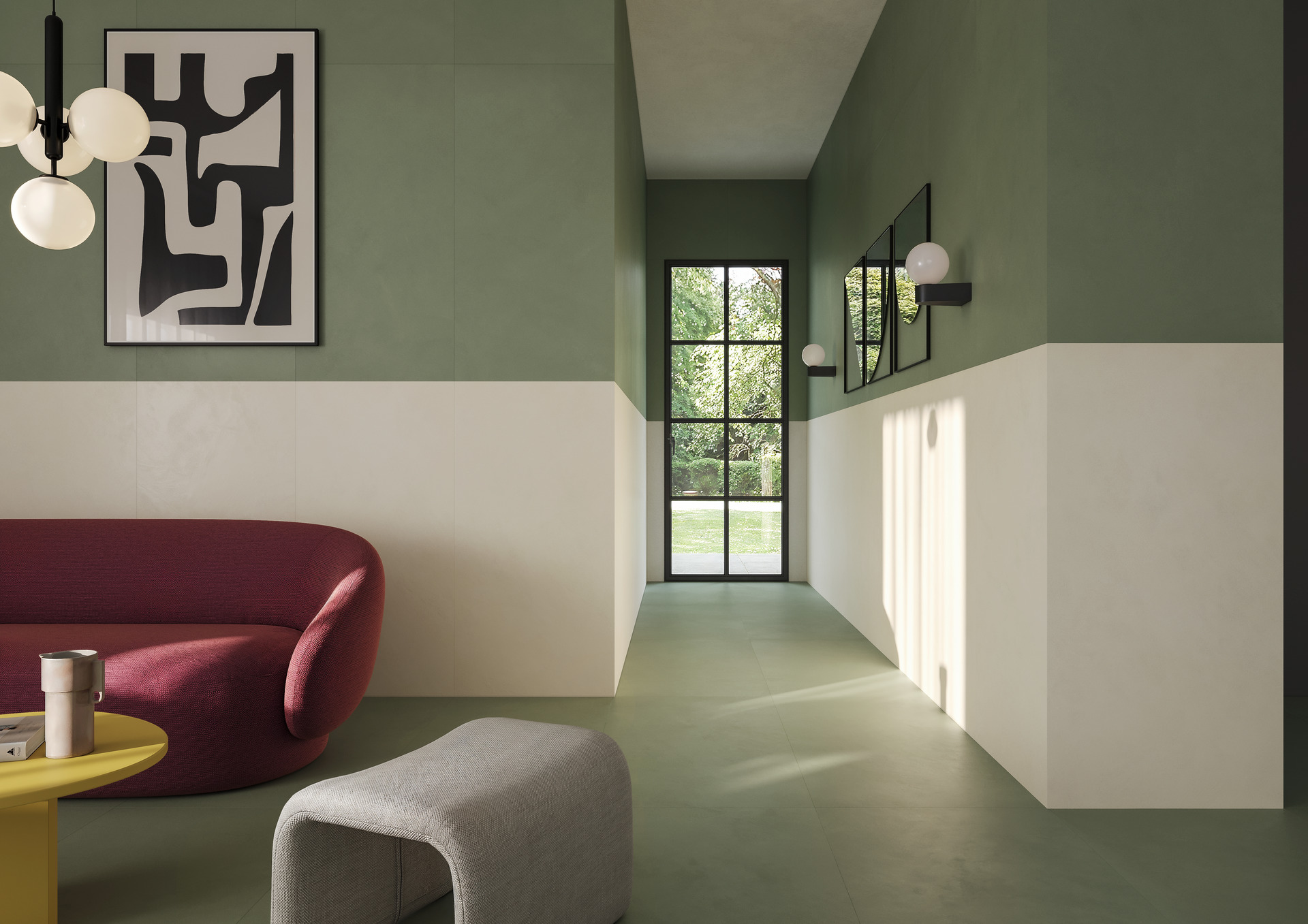
When veining and strong patterns are absent, color takes center stage and the continuity becomes even clearer: solid colors and more uniform effects allow you to work with color as a unifying element.
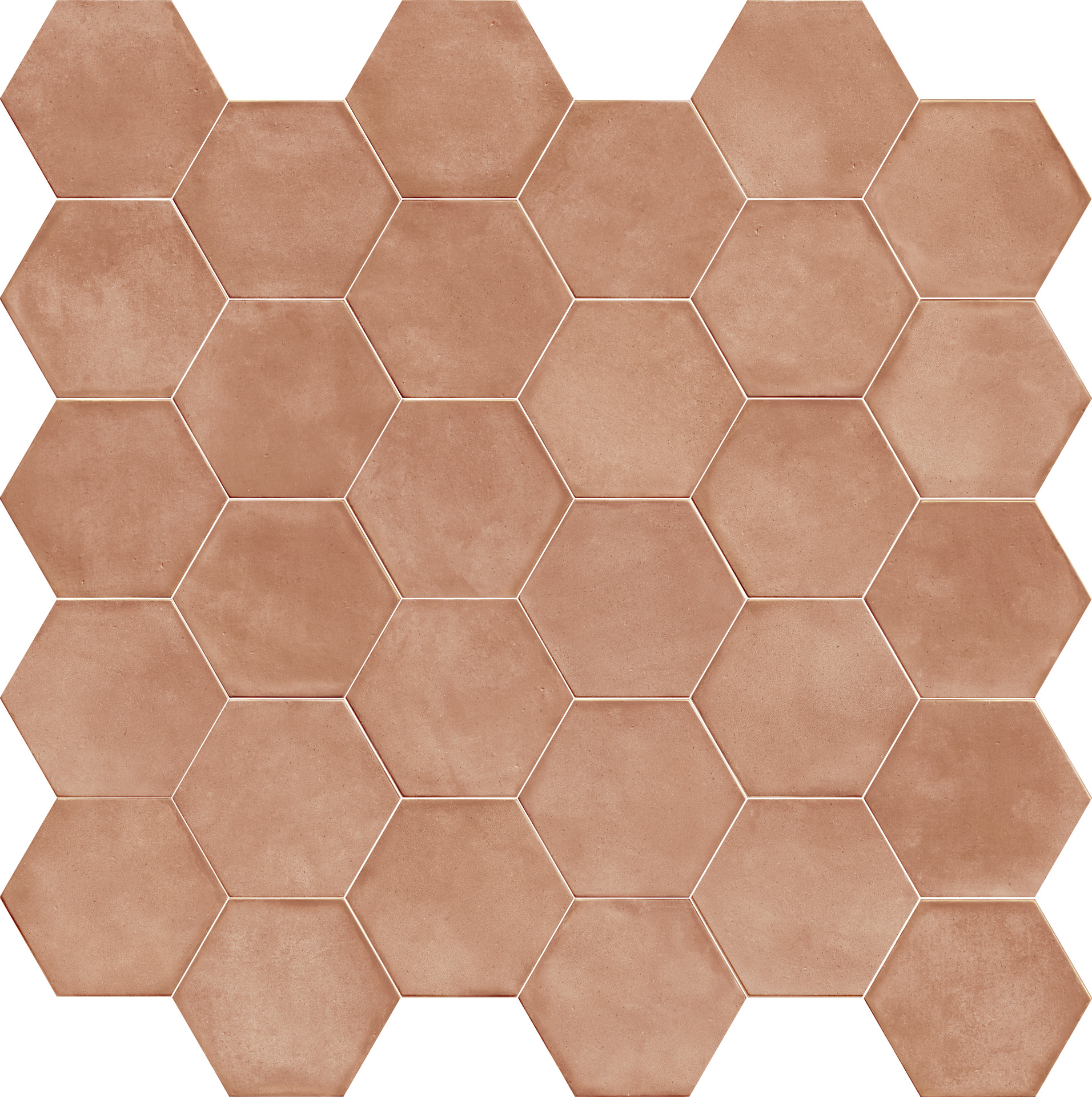
Lume offers a wide range of sixteen glossy porcelain stoneware colors with a majolica effect, ideal for creating a ton-sur-ton envelope on both floor and wall. Resin follows the same idea with a matte resin effect, featuring a uniform and contemporary surface. For those seeking maximum continuity, Grande Solid Color combines solid color with the large slab, reducing grout lines to a minimum. Terralux reinterprets glazed terracotta in eight vibrant colors: the smooth floor version can be paired with a textured wall version in the same shade.
Collections in porcelain stoneware are the most immediate solution for a coordinated project, as they can be used both on floors and walls, maintaining continuity of material, color, and effect.
However, not all ceramic surfaces have the same intended use. Some decorative wall coverings, including thin solutions designed specifically for walls, are not suitable for foot traffic. In these cases, continuity is achieved by pairing a porcelain stoneware floor with a matching wall covering, or by continuing the same porcelain stoneware onto the vertical surface.
It is therefore essential to check that the product is suitable for flooring and consistent with the intended use of the space. The final choice can be made together with the designer, considering not only aesthetics but also comfort and the practical needs of the room.
Not necessarily. Continuity can be achieved through shared color, effect, and material, even when the size and finish differ between floor and wall.
Yes. When both floor and wall are made from the same porcelain stoneware, maintenance follows the same basic principles on both surfaces. For more details, you can consult the guide on how to clean porcelain stoneware.
