









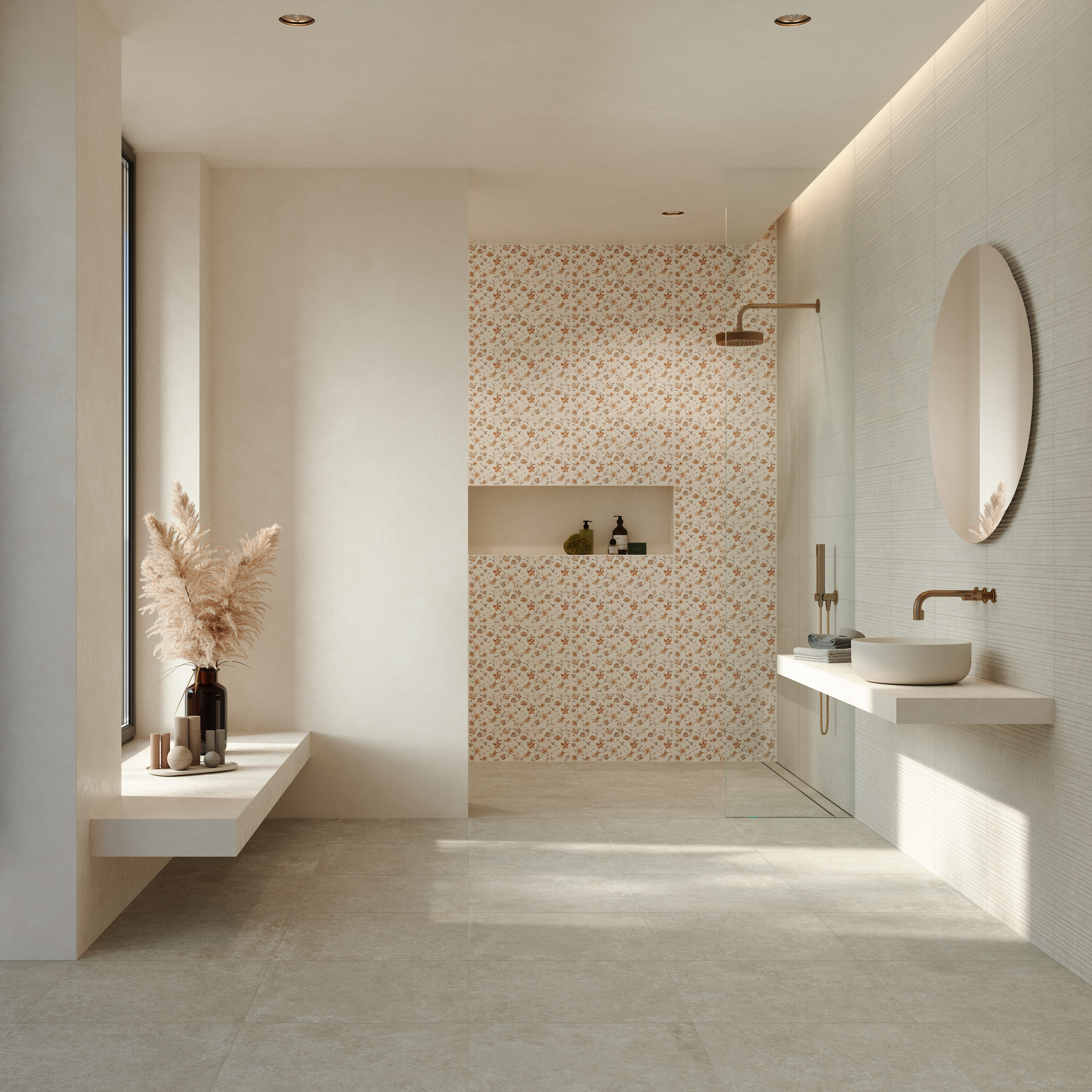
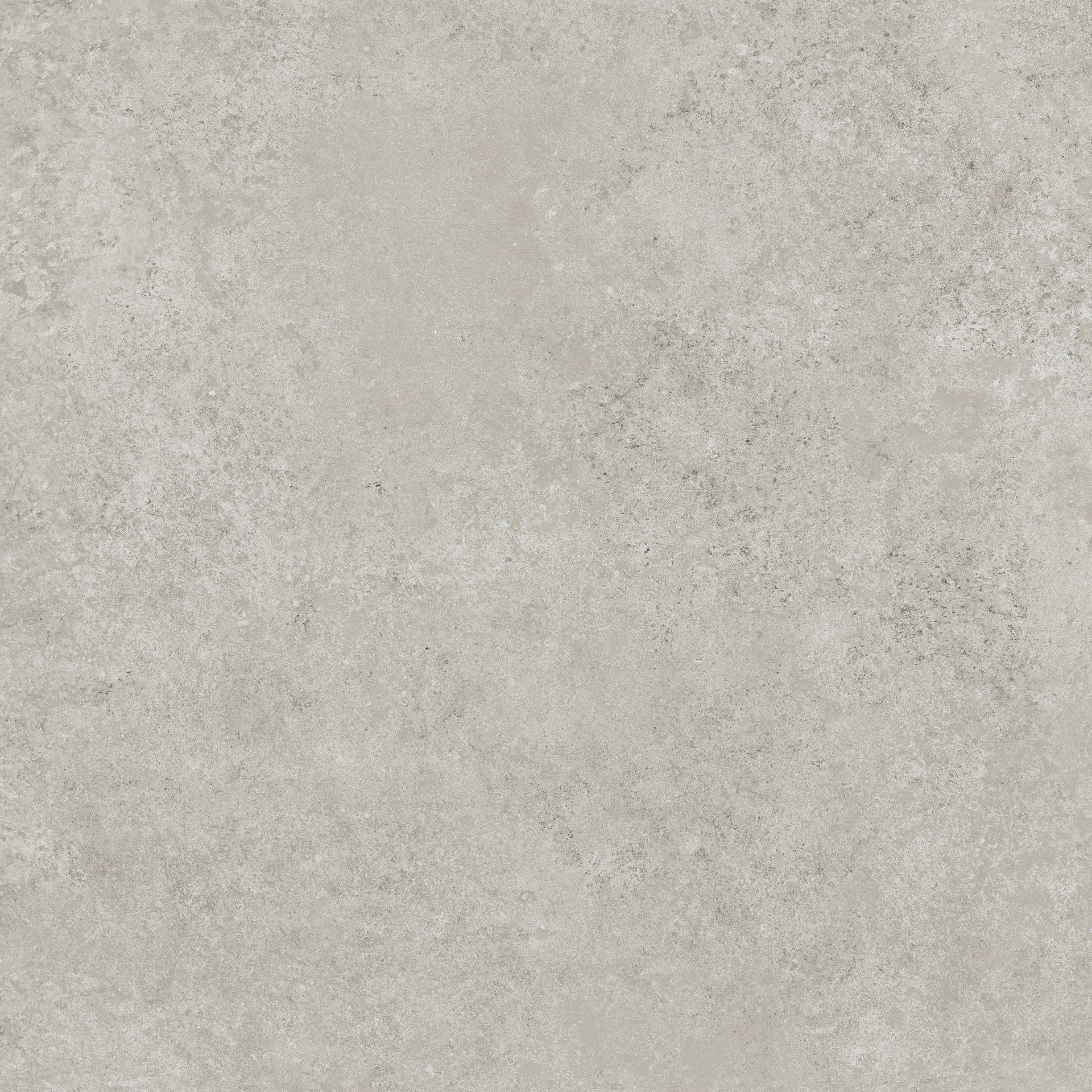
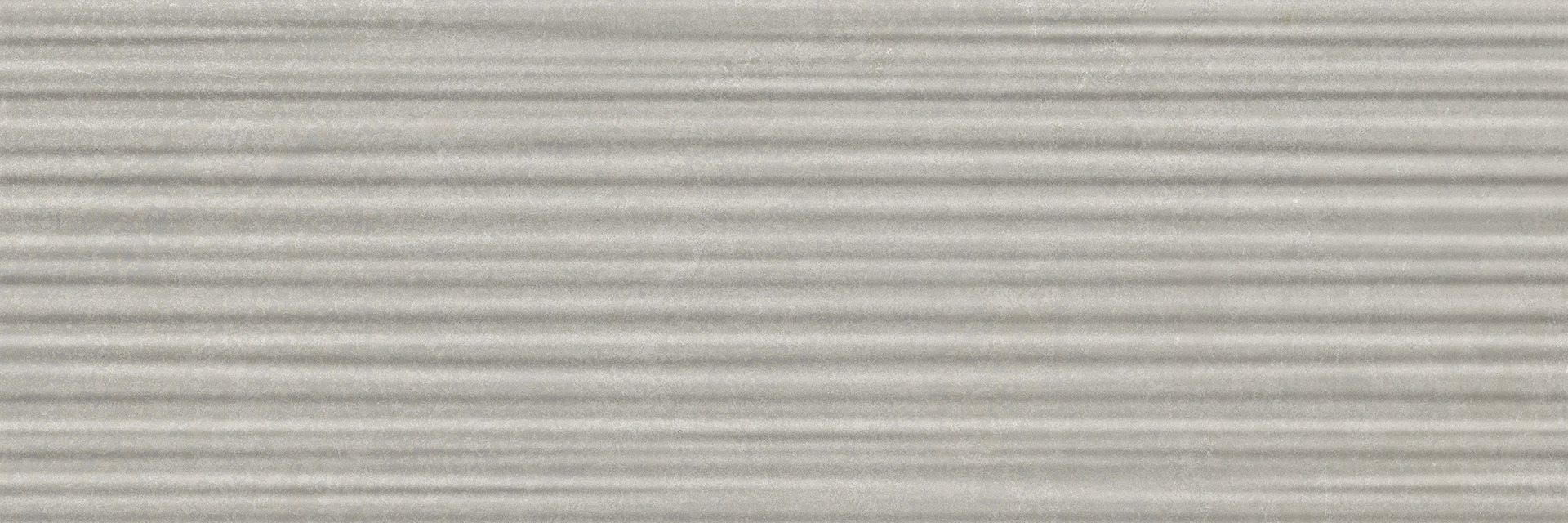
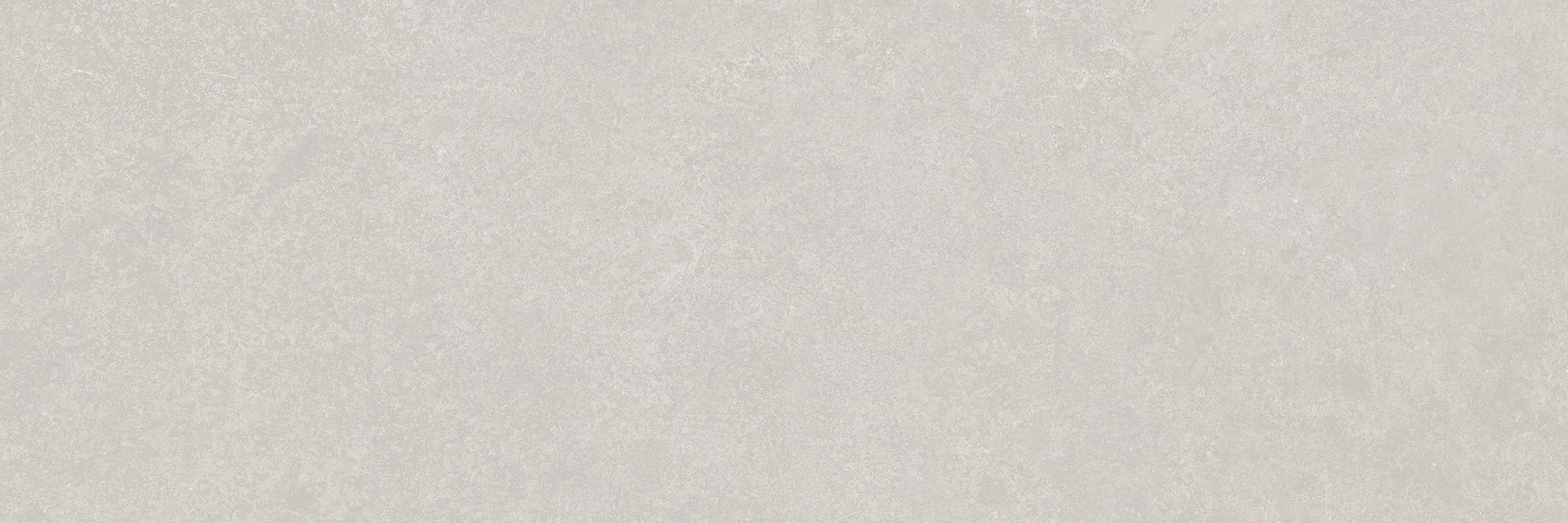
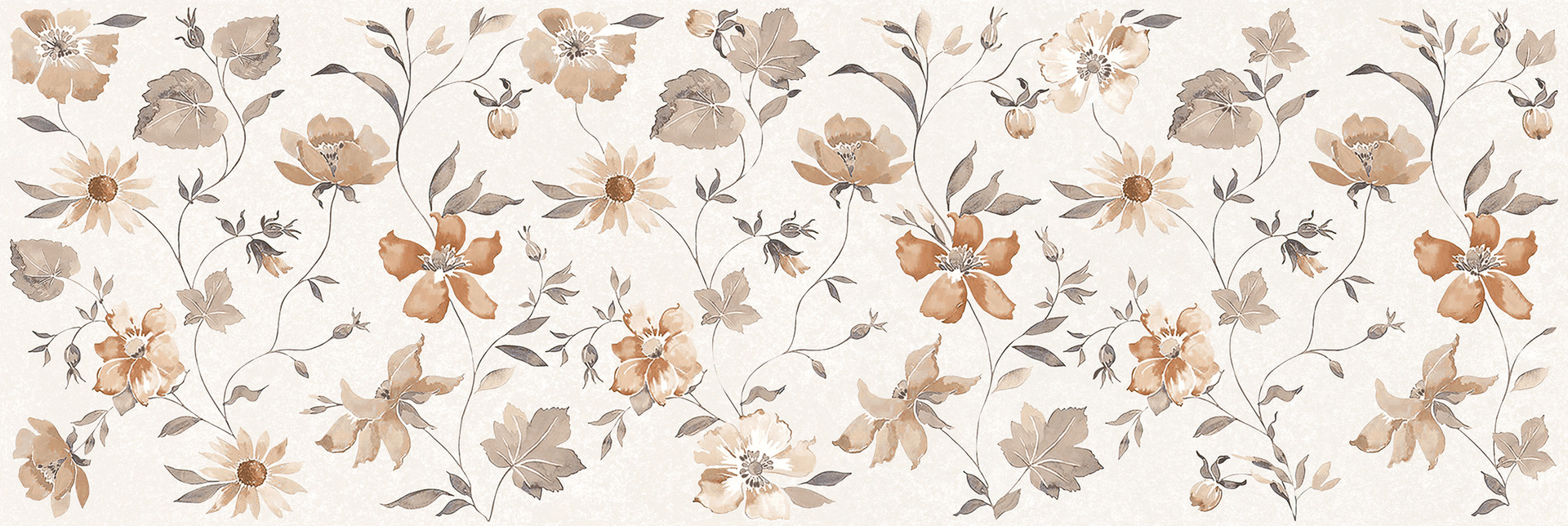


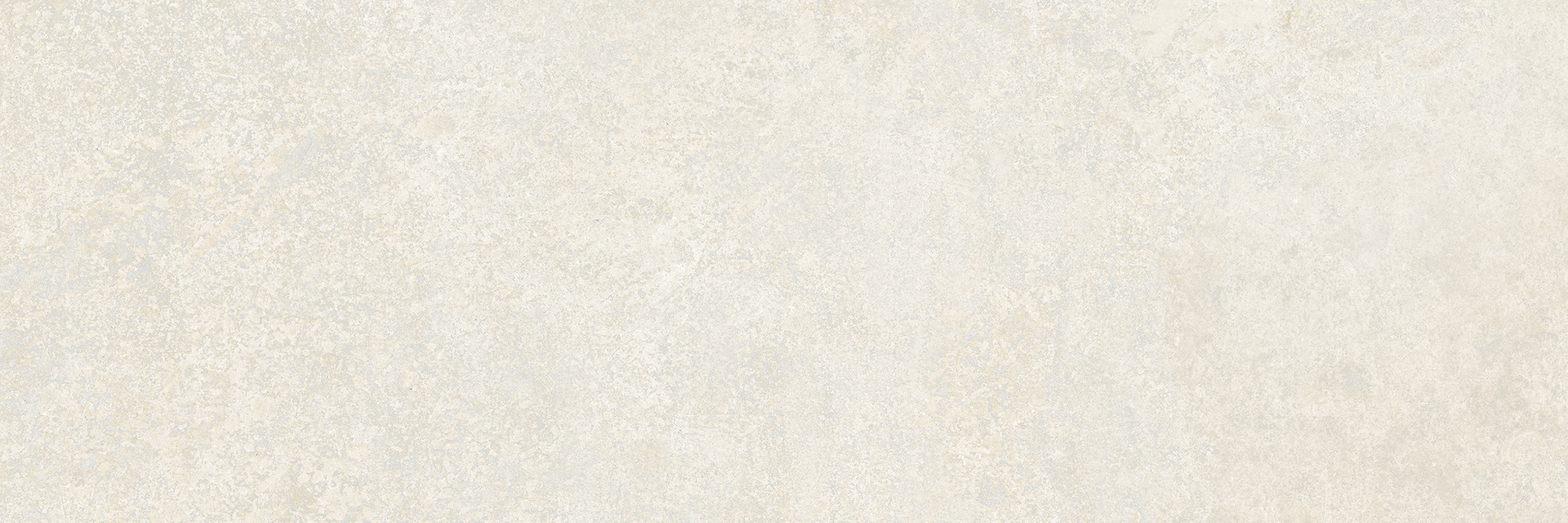
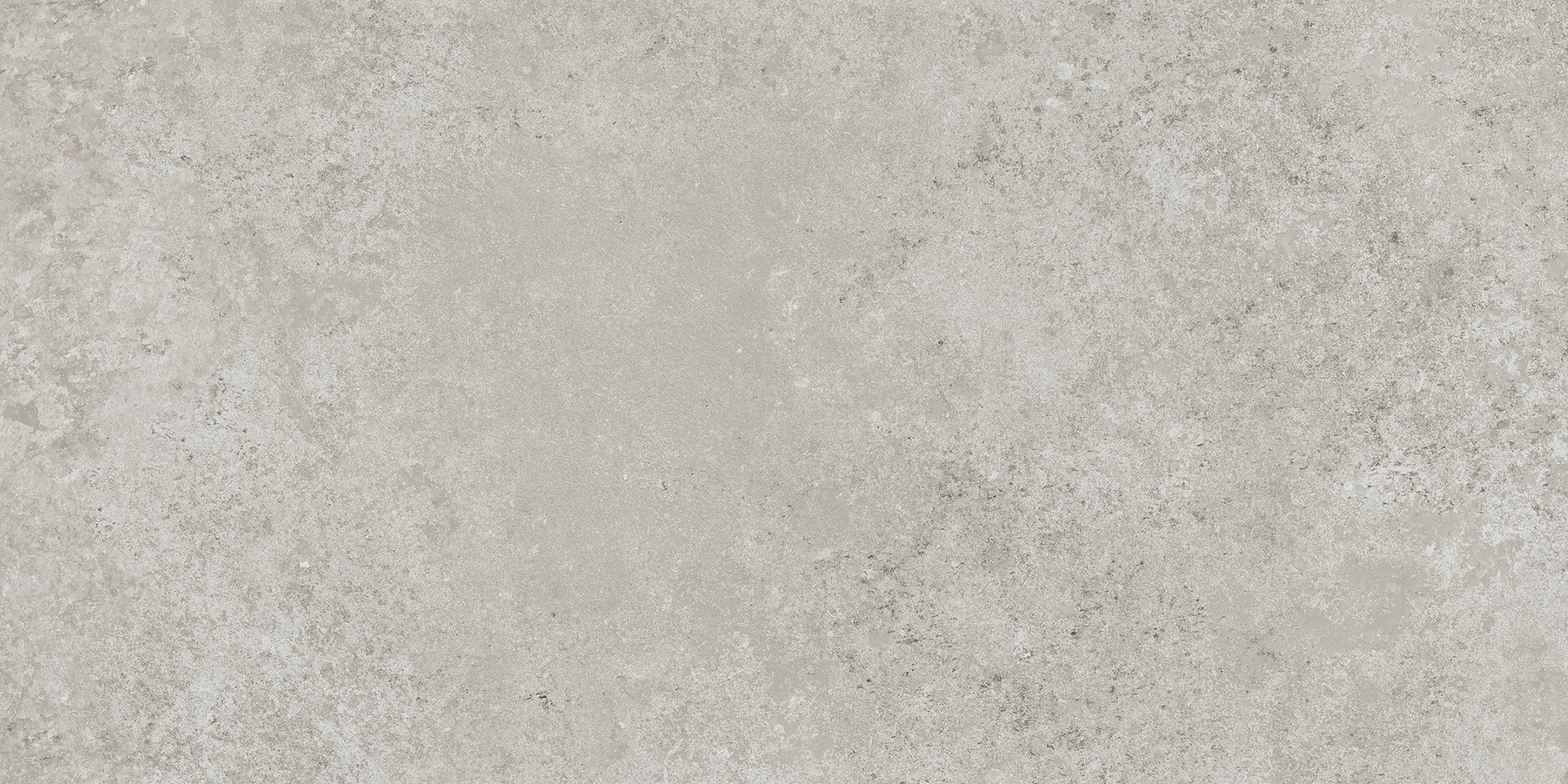


Pietra di Sardegna Wall
- Colors 2
- Surfaces 1
- Sizes 1





Explore the Marazzi collections of porcelain stoneware and ceramic wall coverings for indoor and outdoor spaces: from large slabs that clad walls from floor to ceiling to decorative surfaces with embossed details and three-dimensional textures.
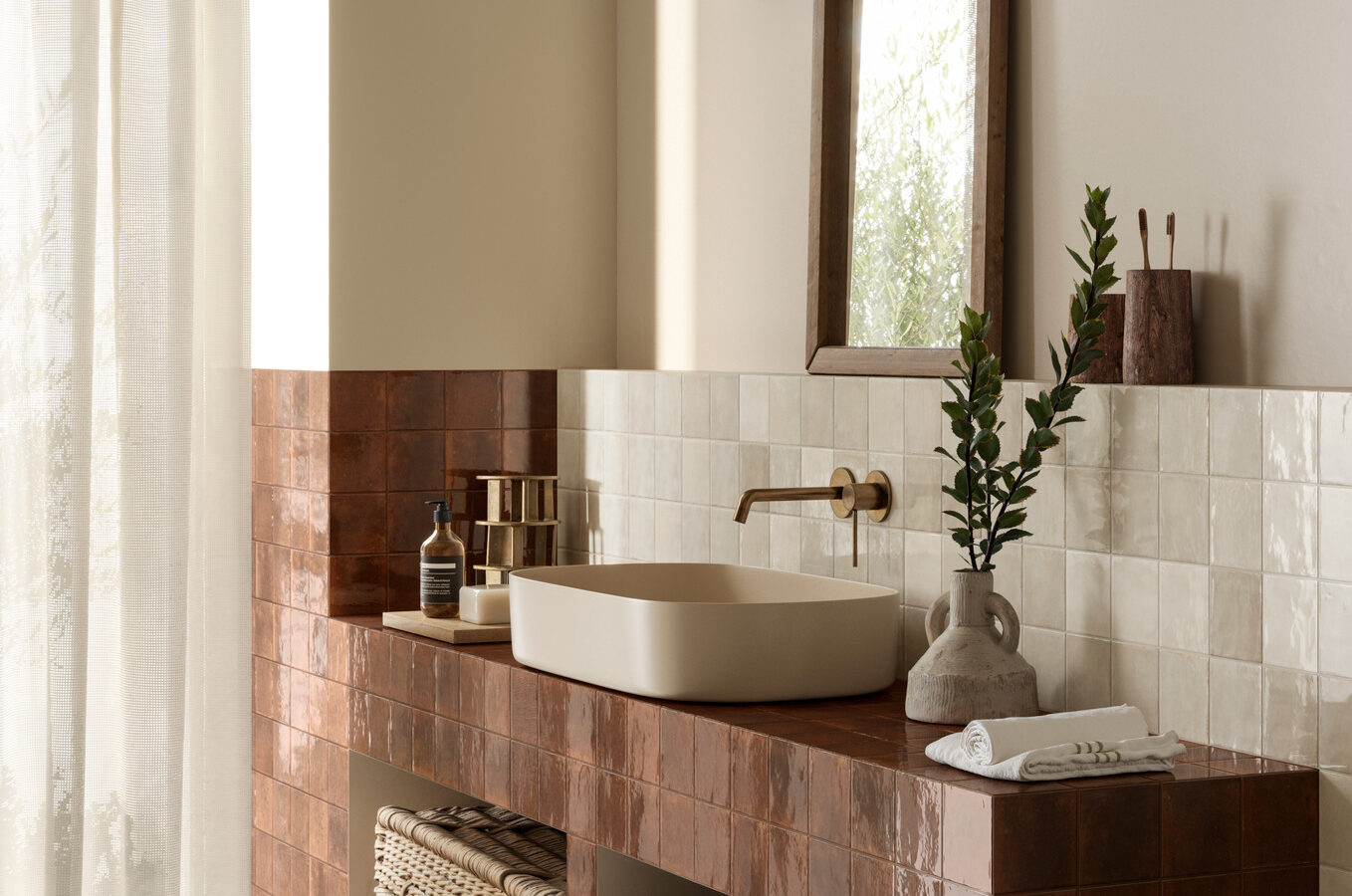
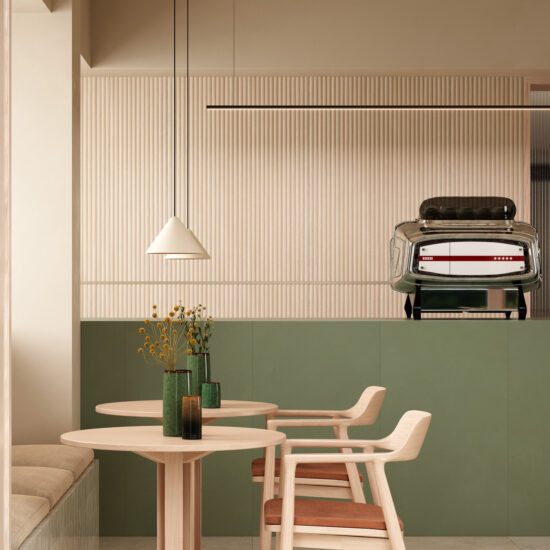


Choosing a wall covering means defining the role the wall will have in the project, not just its color or material.
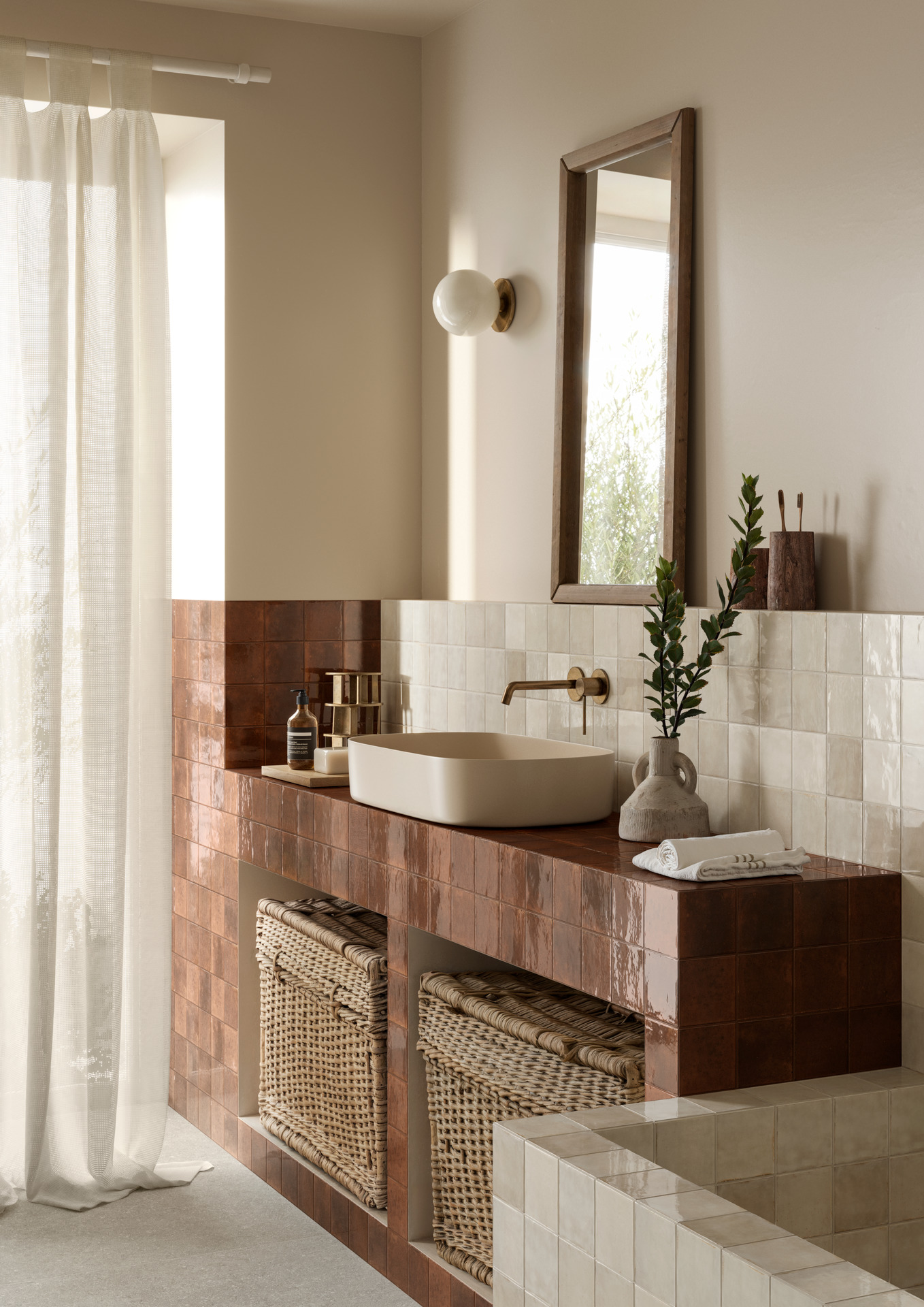
In interior spaces, a ceramic surface can discreetly accompany the architecture by covering entire walls, or it can become a decorative element through graphic patterns, three-dimensional structures, and combinations of different formats.
The possibilities also extend to specific applications, such as swimming pool coverings and furniture elements: the large slabs from the The Top line, for example, allow you to coordinate kitchen countertops, cabinet doors, and other surfaces with dedicated processing.
For external walls, however, the choice must start from the technical characteristics of the product: you need to select a porcelain stoneware suitable for exposure to weather and the intended installation system, also considering the climate conditions and the destination of the surface.
A fully tiled wall and an accent wall meet different design needs. In the first case, the material helps build the identity of the entire space; in the second, it becomes a distinctive element that draws attention to a specific area.
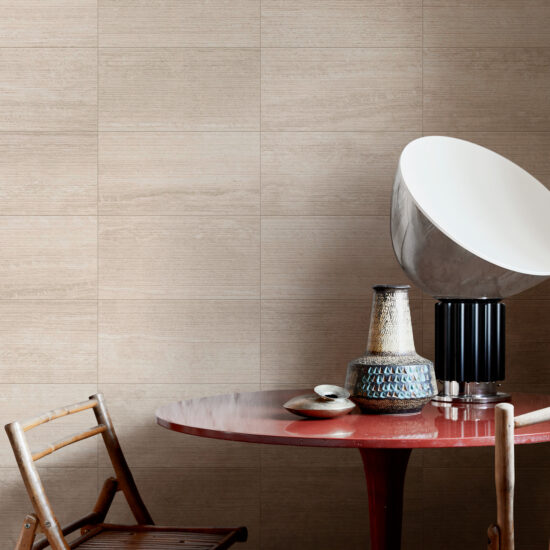
Ceramics allow for both approaches, thanks to the availability of formats, finishes and visual effects ranging from the most uniform surfaces to interpretations of stone, wood, marble, and concrete.
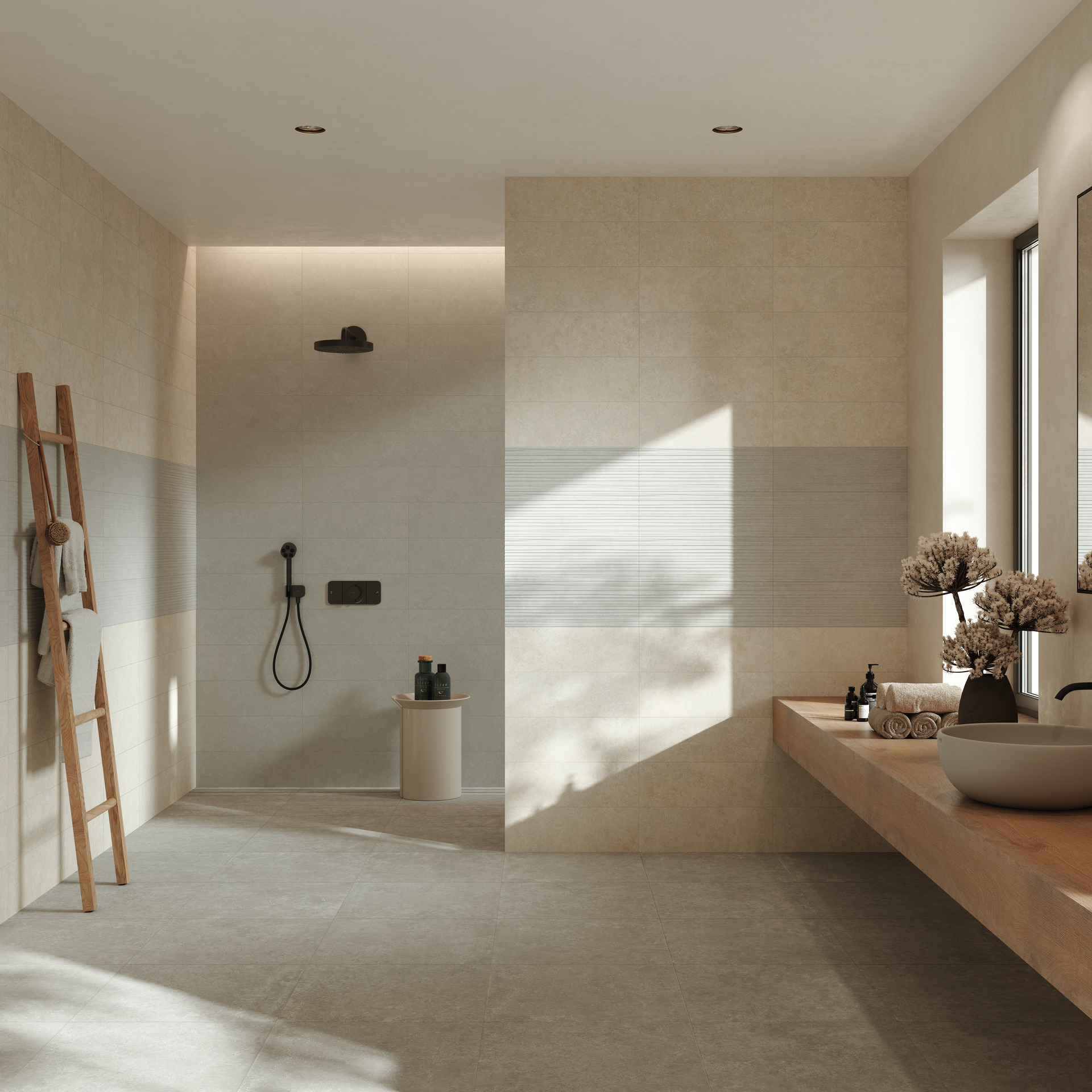
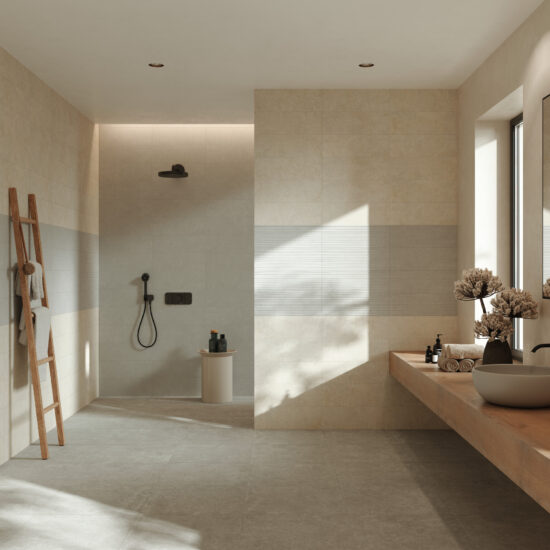
The layout of the wall covering is also important: full-height installation emphasizes the vertical development of the room, while a decorative band or an insert can visually define a function, such as the washbasin area, the kitchen backsplash, or the living room wall.
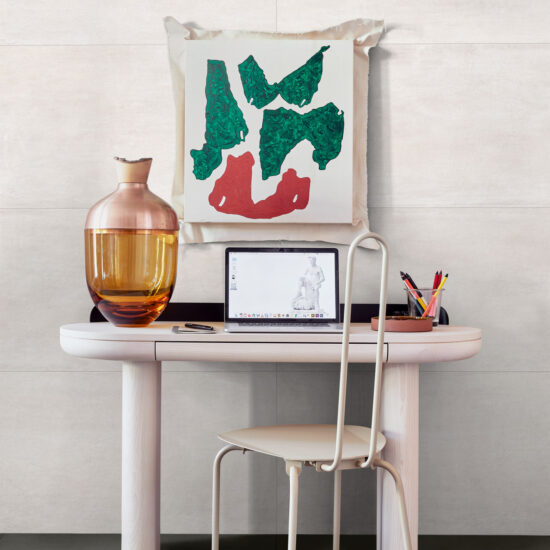
Tiling a wall up to the ceiling allows you to treat it as a single architectural surface, especially when you choose large tiles and minimal grout lines.
The large formats and large slabs reduce the number of joints and give more space to the material’s graphics. Veining and material details can thus develop over larger portions of the wall, without being interrupted by a dense grid of grout lines.
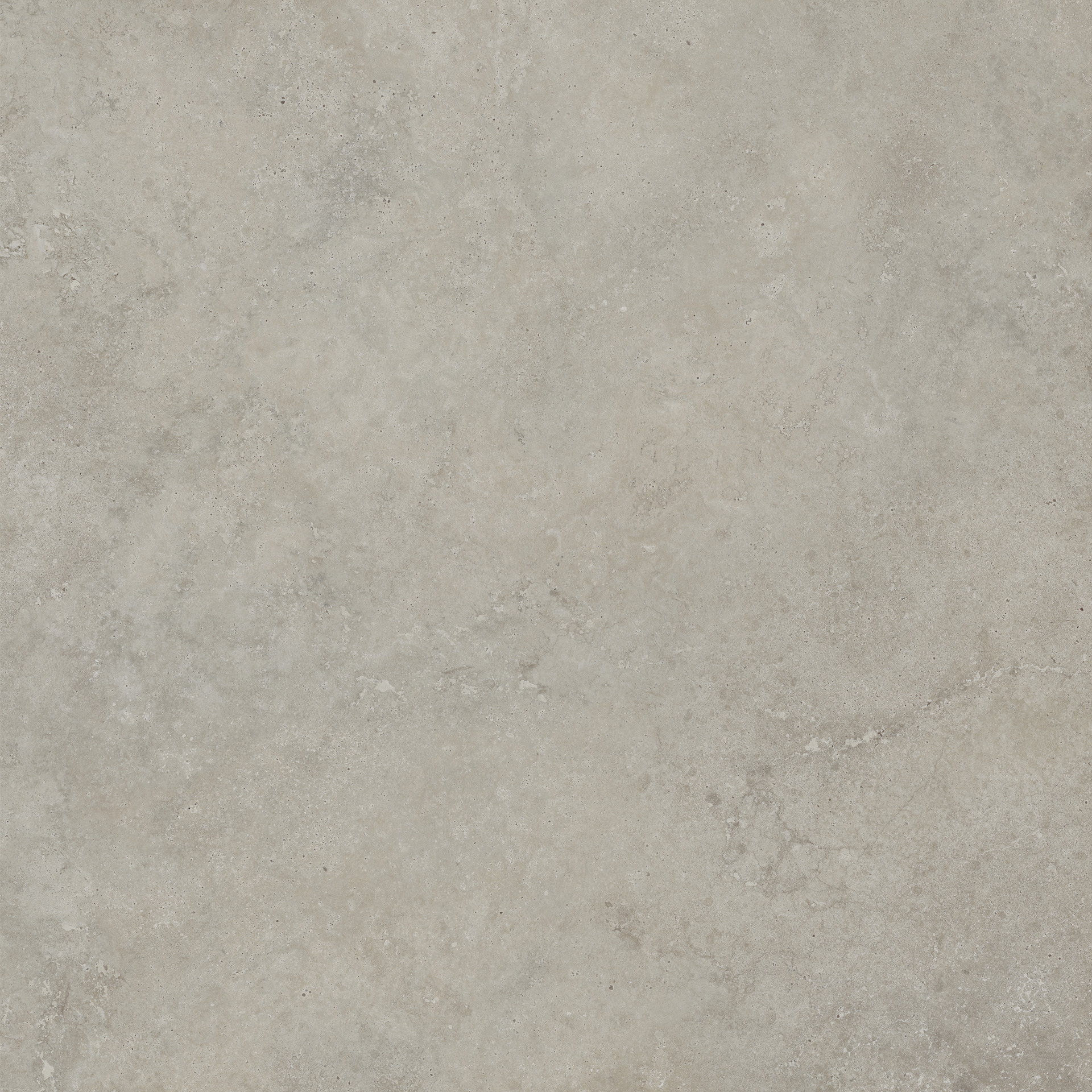
The Grande Marazzi collections expand this possibility with porcelain stoneware slabs that interpret different visual effects, from highly veined marbles to natural stones.
Vertical continuity can also be achieved with modules specifically designed for wall coverings. The Crea collection, for example, offers white-body tiles that can be installed by overlapping two elements to cover 270 cm in height.
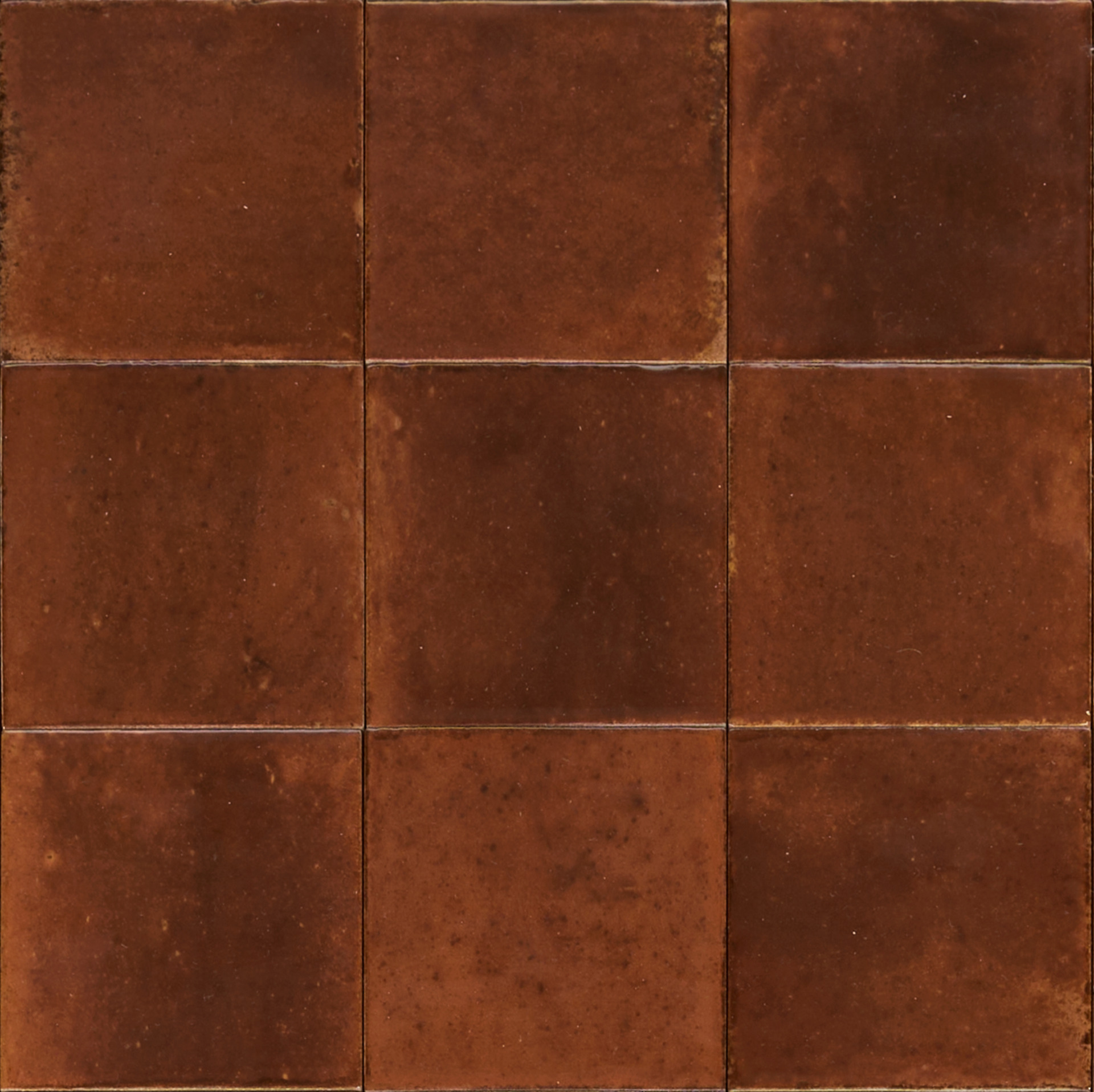
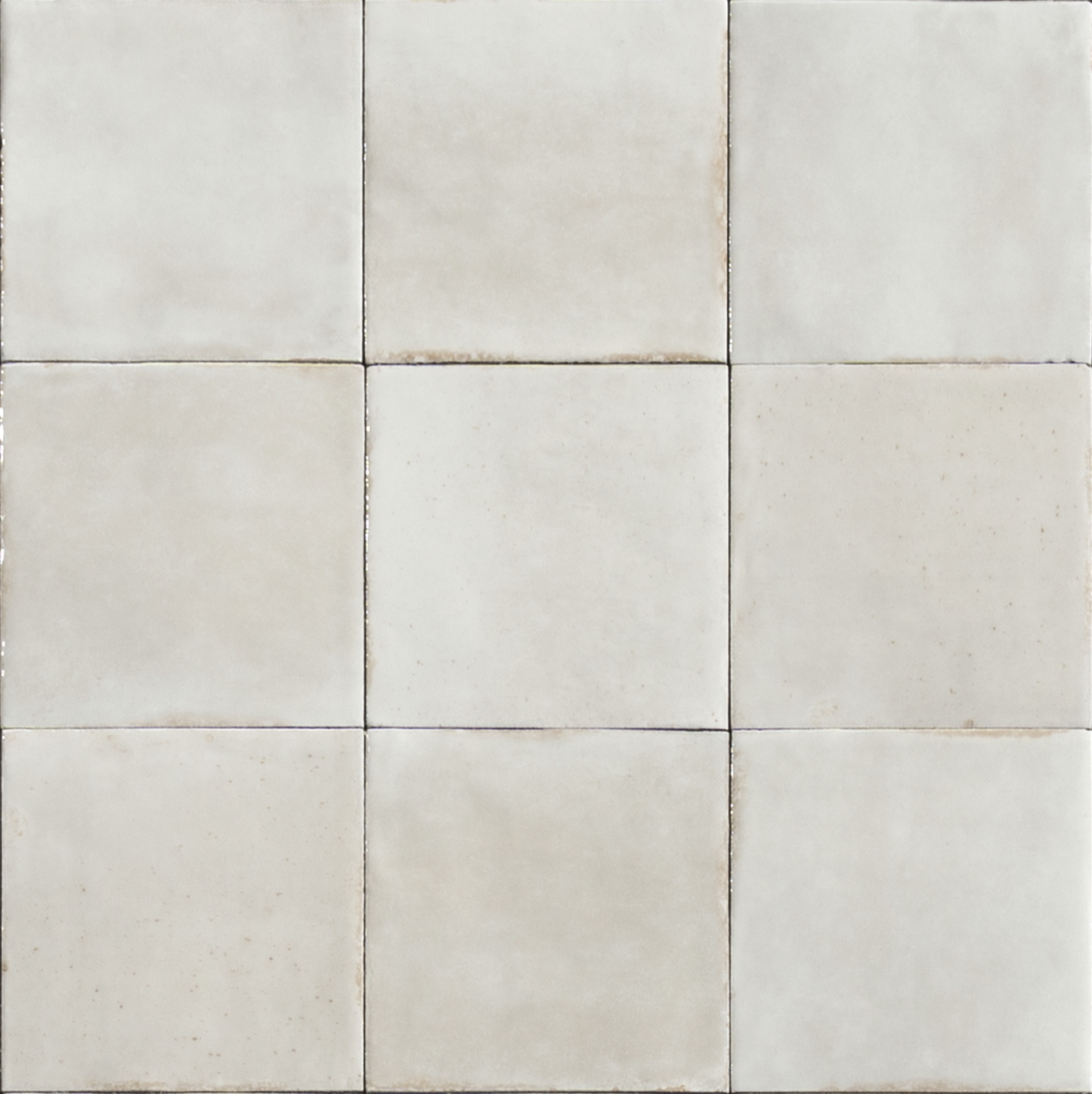
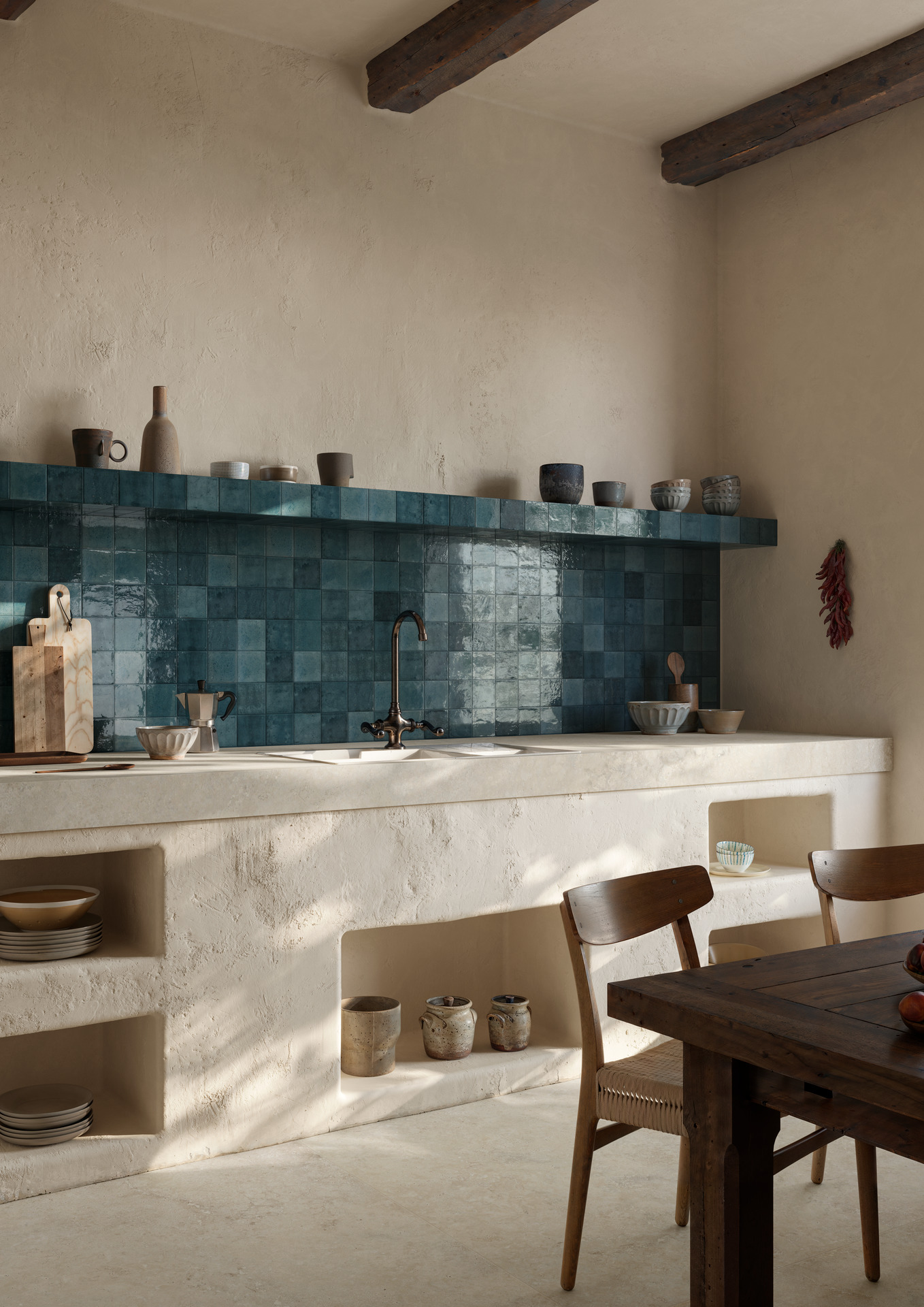
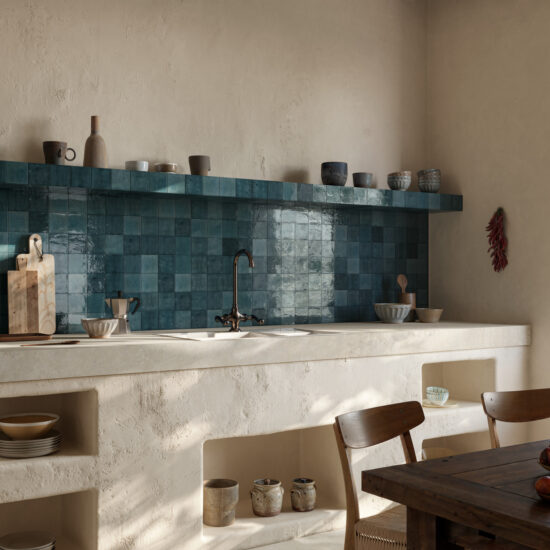
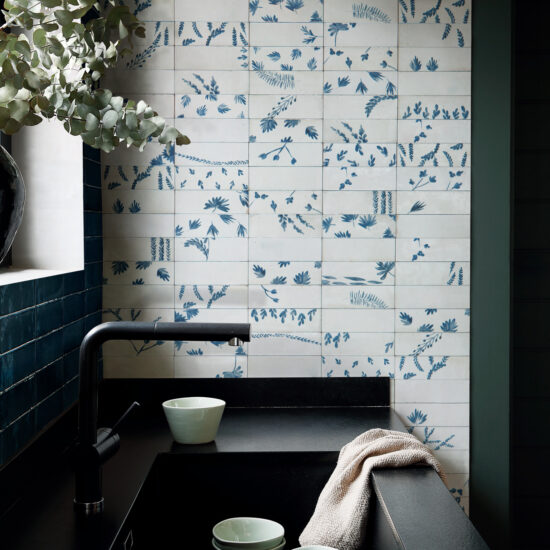
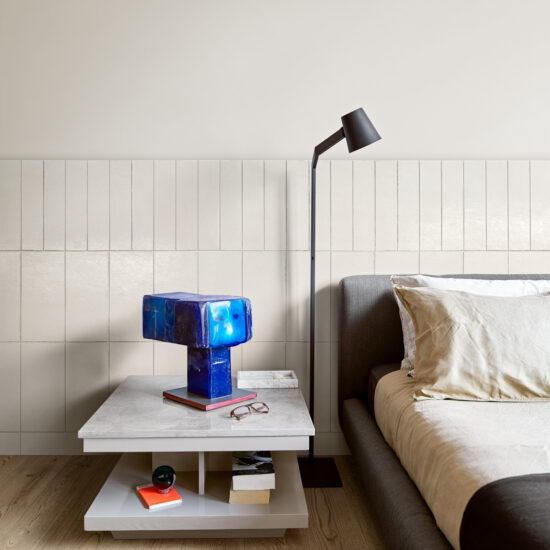
For a more decorative look, Lume interprets wall coverings with small glossy majolica-effect formats, which can be extended to full height, transforming the pattern of grout lines and reflections into an integral part of the design.
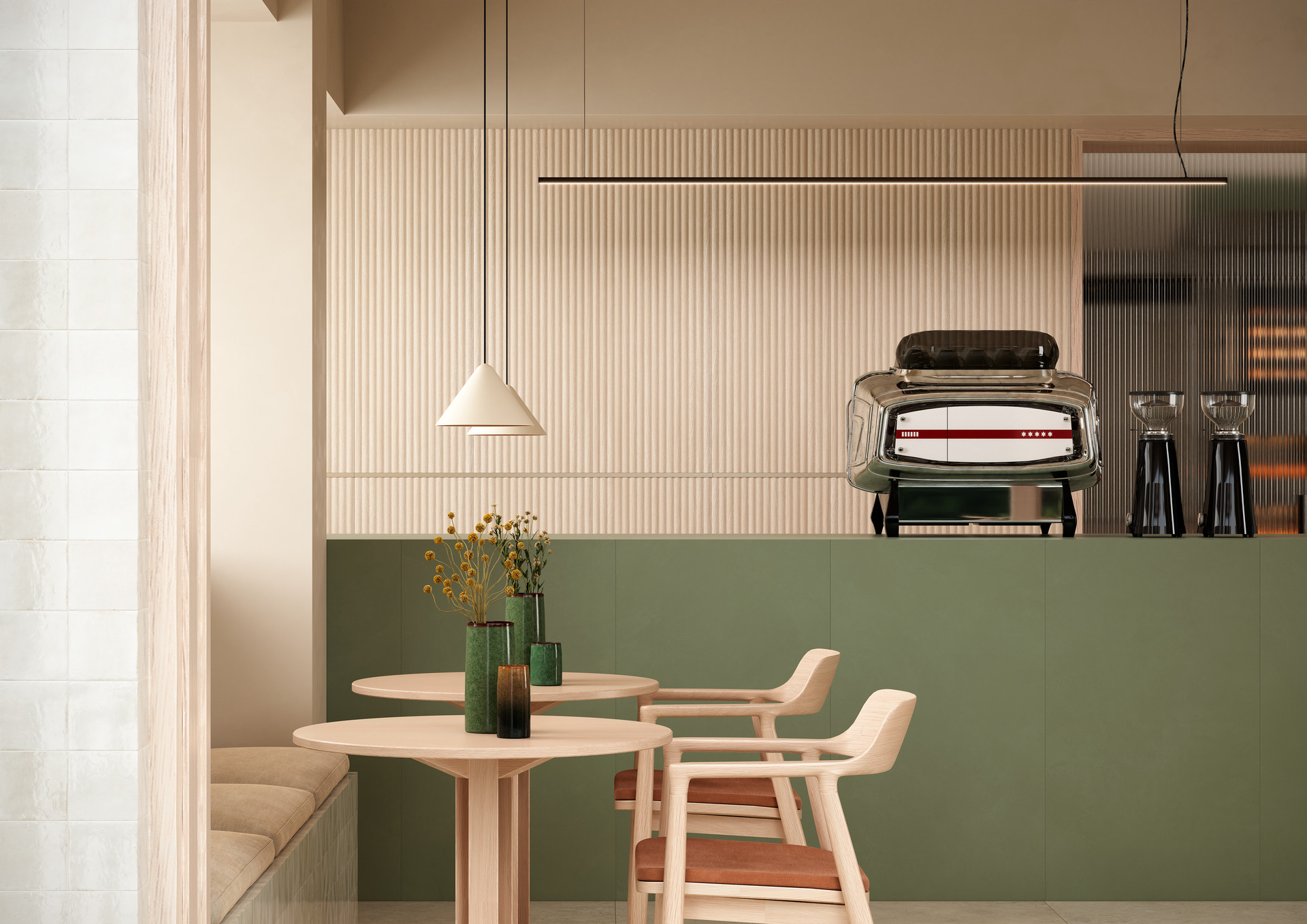
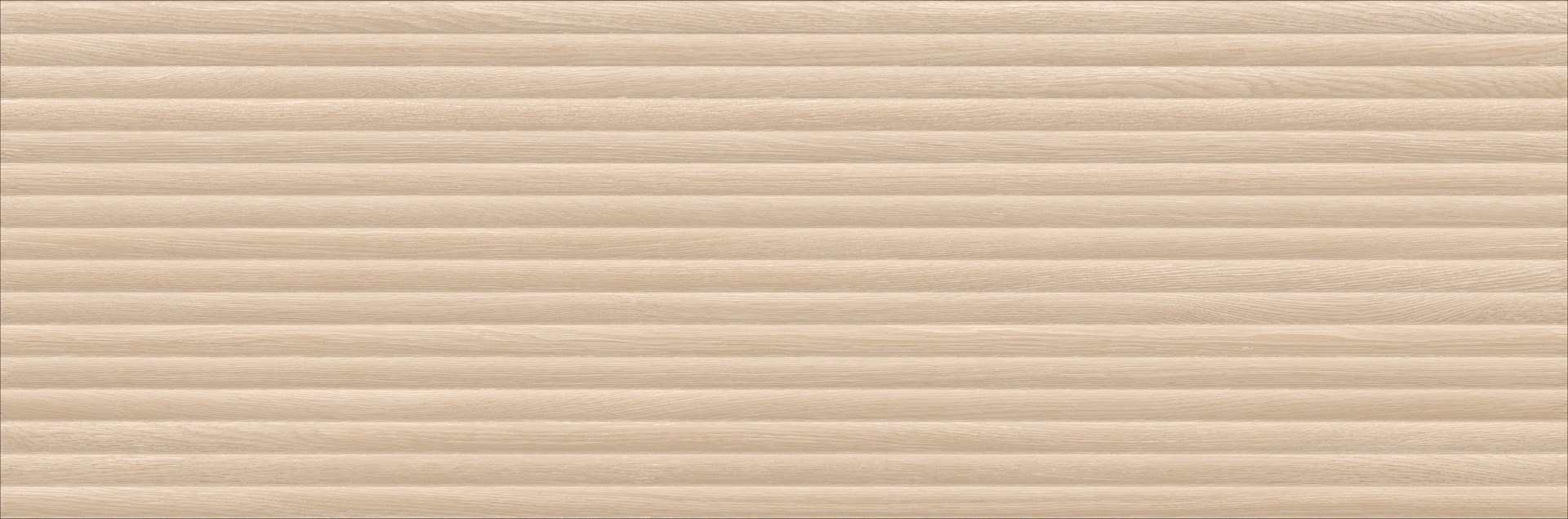
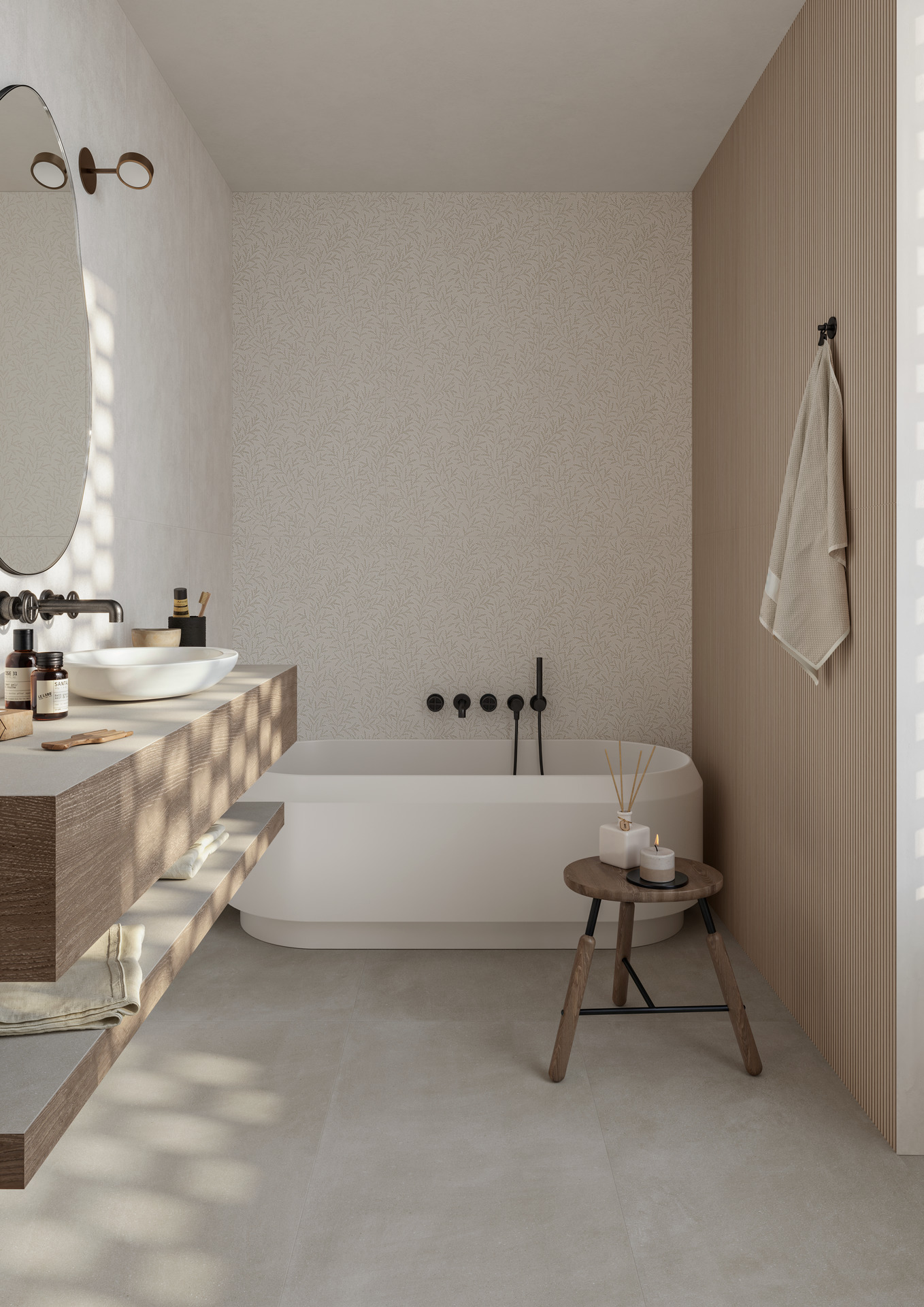
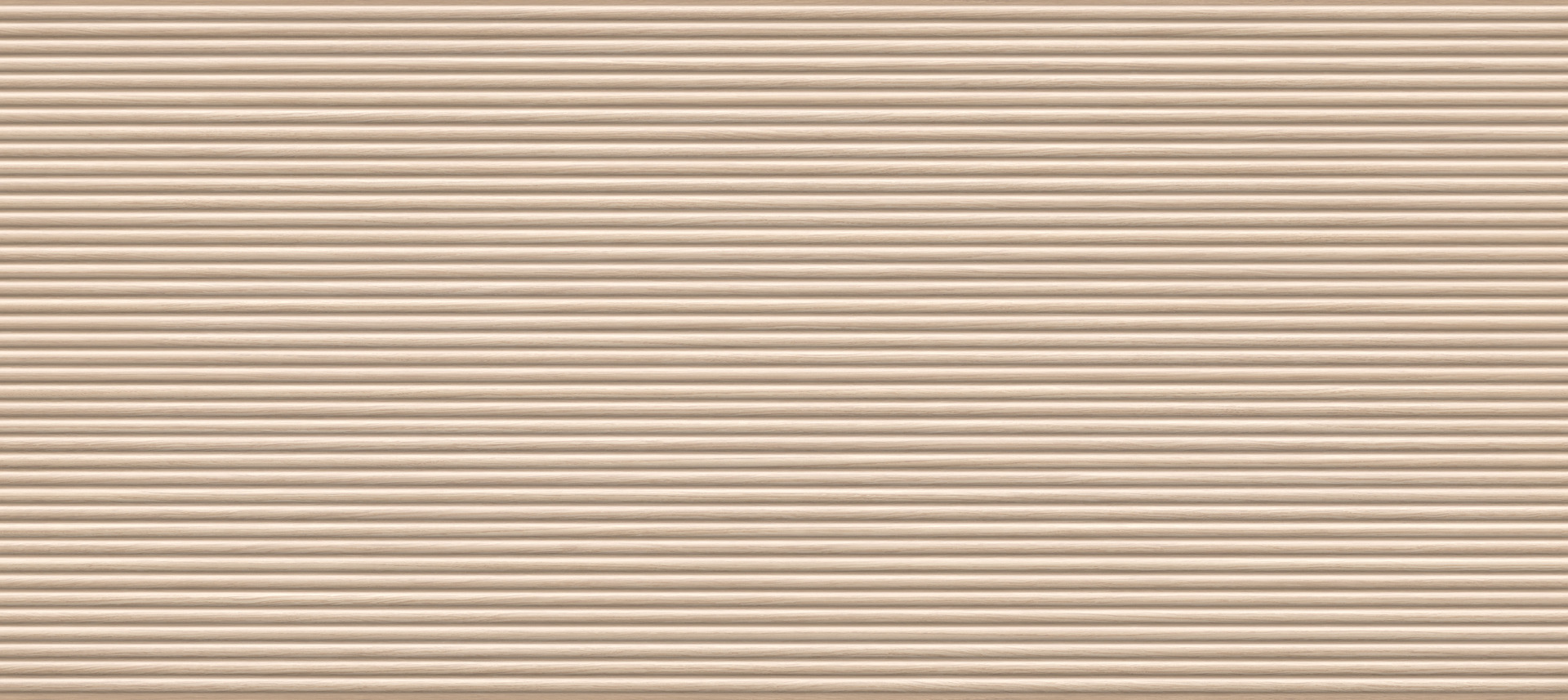
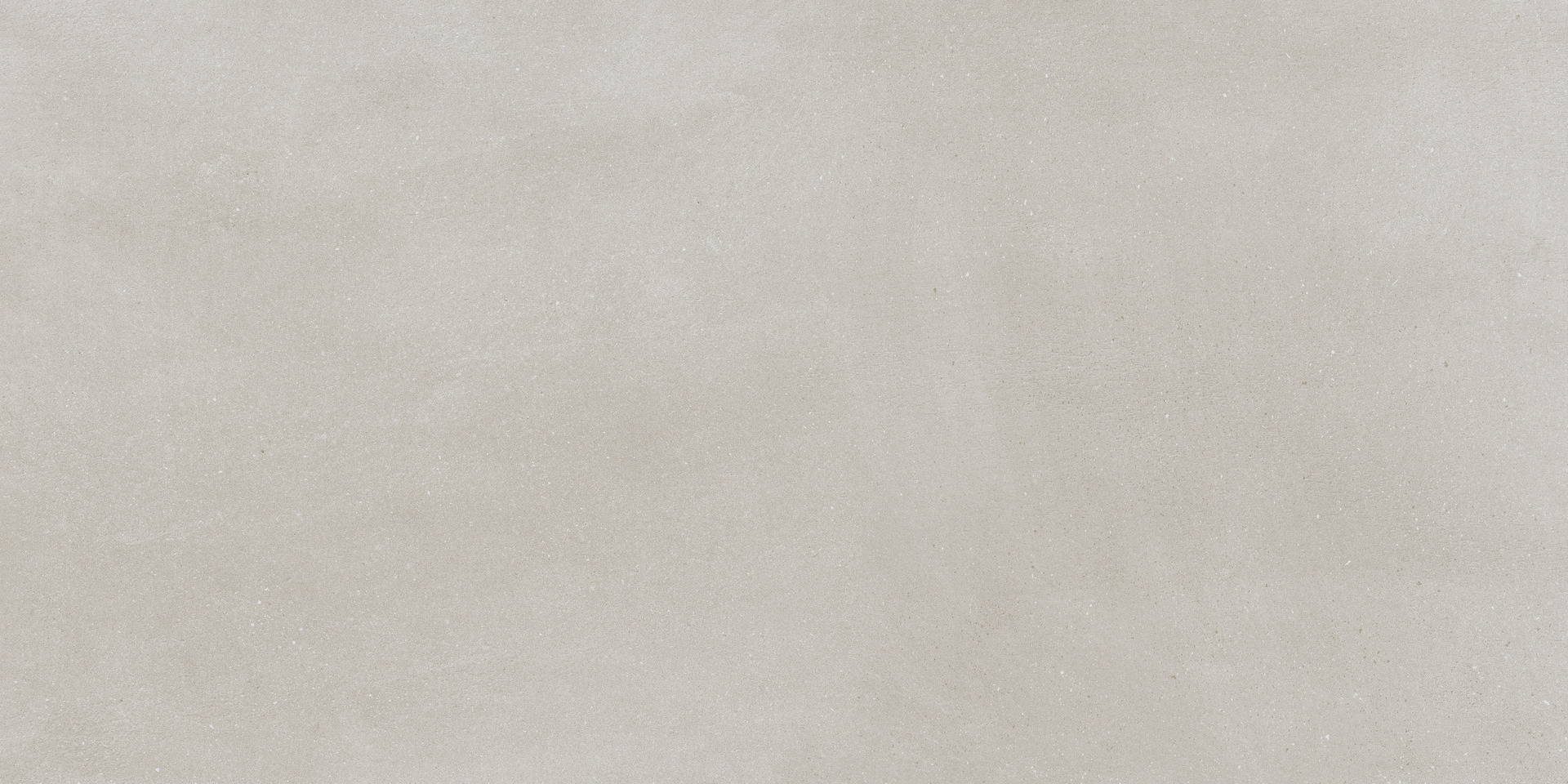
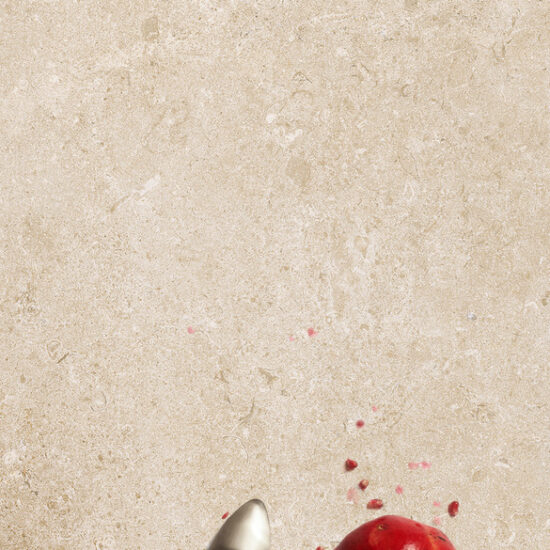
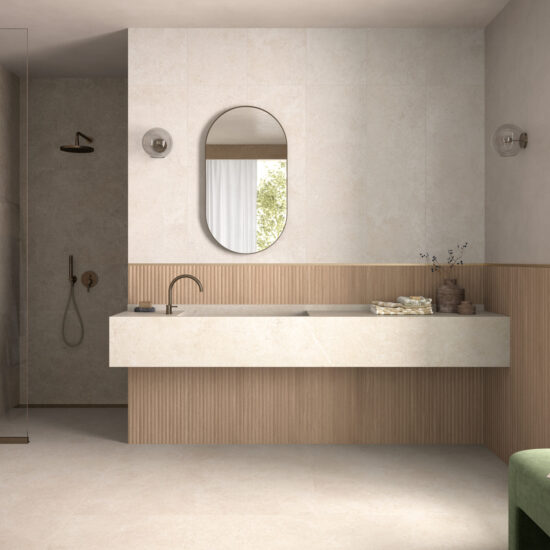
Wall-dedicated collections also allow you to work more strongly on texture and relief. Campaspero Wall translates the look of sedimentary stone into decorative wall coverings, while Pietra di Sardegna Wall offers 40x120 cm white-body surfaces enhanced by the 3D Set structure and Comb decor, with reliefs and ribbed bands inspired by Breccia Sarda.
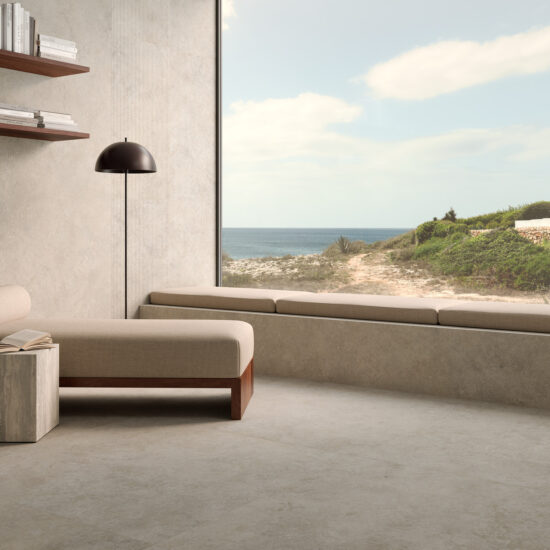
On the more minimalist side, Cementum Wall brings the look of concrete to the wall through textured and structured surfaces, allowing you to coordinate the wall covering with a contemporary language without sacrificing the decorative component.
The choice of effect helps define the atmosphere of the space: stone-effect porcelain stoneware creates a natural look, while concrete-effect surfaces enhance a more minimal, architectural language.
Read also: At what height should you design the bathroom wall covering: half wall or ceiling?
A decorative wall covering can identify the focal point of the room, highlighting an architectural volume, the TV area, or the wall behind a sofa.
In the living room, for example, three-dimensional textures and graphic patterns can replace other wall decorations, introducing depth through the interplay of light and surface.
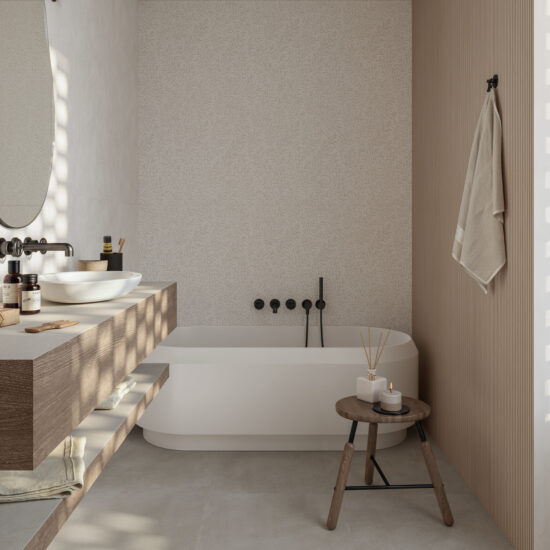
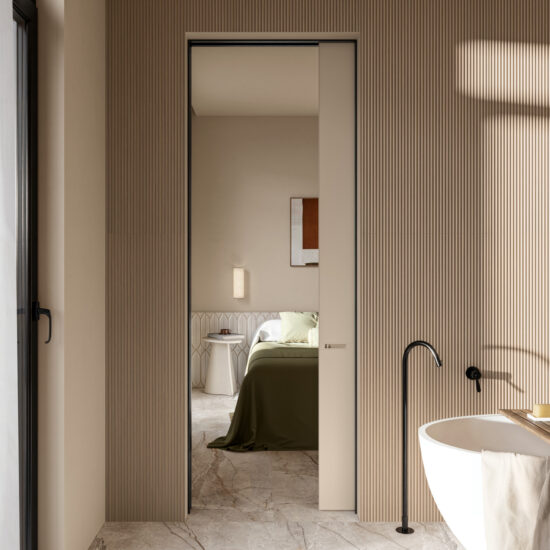
Among the Marazzi collections, Boiserie reinterprets the language of wood paneling through 40x120 cm white-body wall coverings. The three-dimensional structures, available in Oak and Light Oak shades, interpret wood grain using 3D Ink technology, offering a solution for walls with a warm, textured look.
A more tactile approach is offered by Fabula Wall, which brings decorative surfaces to the wall, focusing on texture, relief, and visual variations. Likewise, Slow Wall interprets wall coverings with contemporary structures and finishes, enhancing the wall as a decorative element in the design.
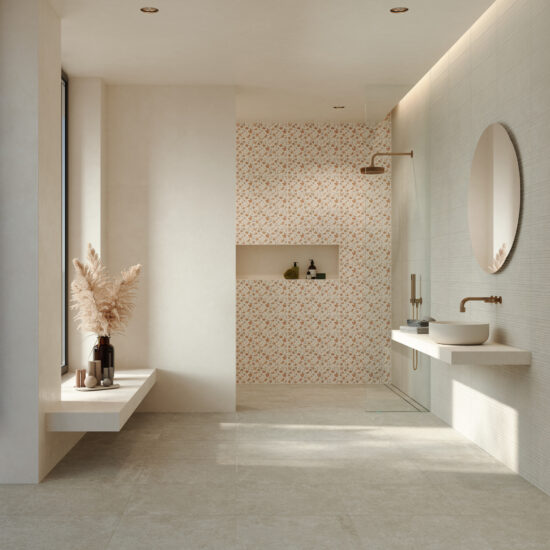
For those looking for a more striking motif, White Deco offers white-body wall coverings with botanical, floral, and geometric decorations. The Touch technology enhances the details with subtle reliefs, making the wall a decorative feature even without the use of strong colors.
The decorative tiles allow experimentation with patterns, colors, and material combinations, while wood-effect surfaces provide an interesting solution to bring the visual warmth of natural wood species to the walls.
The choice of material for wall coverings depends on both the desired visual result and the installation conditions and intended use.
Two main ceramic solutions are white-body wall coverings, designed for indoor vertical surfaces, and porcelain stoneware, which can also be used for other applications when the characteristics of the specific product make it suitable.
White-body wall coverings are distinguished by their lightness and thin thickness. They are designed to be installed on surfaces not intended for foot traffic, such as bathroom walls, kitchen walls, and other indoor spaces, and make it possible to enhance the space through different finishes, textures, and decorative patterns.
Porcelain stoneware, on the other hand, is recommended when the design requires a material suitable for use on floors or, for suitable surfaces, in outdoor areas. Its low water absorption, strength, and the availability of different finishes make it a versatile solution for coordinating surfaces with different requirements.
The Marazzi collections for floors and walls allow you to explore these options, checking the finishes and intended uses available for each product.
The distinction is not only a matter of thickness: a white-body wall covering, even when large in format, is still meant for walls, whereas to use porcelain stoneware on floors you need to ensure that the specific tile is suitable for foot traffic.
Designing an exterior wall introduces different requirements compared to interior spaces: the wall covering must be suitable for exposure to the elements, temperature changes, and, where necessary, frost.
Porcelain stoneware is an effective solution for covering exterior walls, low walls, and architectural surfaces thanks to the material’s compactness and low water absorption. For example, it is used for ventilated facades, where ceramic slabs guarantee optimal performance and long-lasting resistance. For these applications, regular white-body wall coverings intended for interior walls are not used: porcelain stoneware products suitable for the system and the intended environmental conditions are required.
To find the most suitable options, you can consult the Marazzi collections for indoor and outdoor spaces, which make it possible to coordinate the look of surfaces while maintaining the technical characteristics required by the different applications.
Read also: Ventilated facades: durability and design for modern architecture
Porcelain stoneware, thanks to its compactness and low water absorption, makes it easy to clean the ceramic surface, but the grout lines must be considered separately, according to the material used and the manufacturer's instructions.
Read also: How to clean tile grout
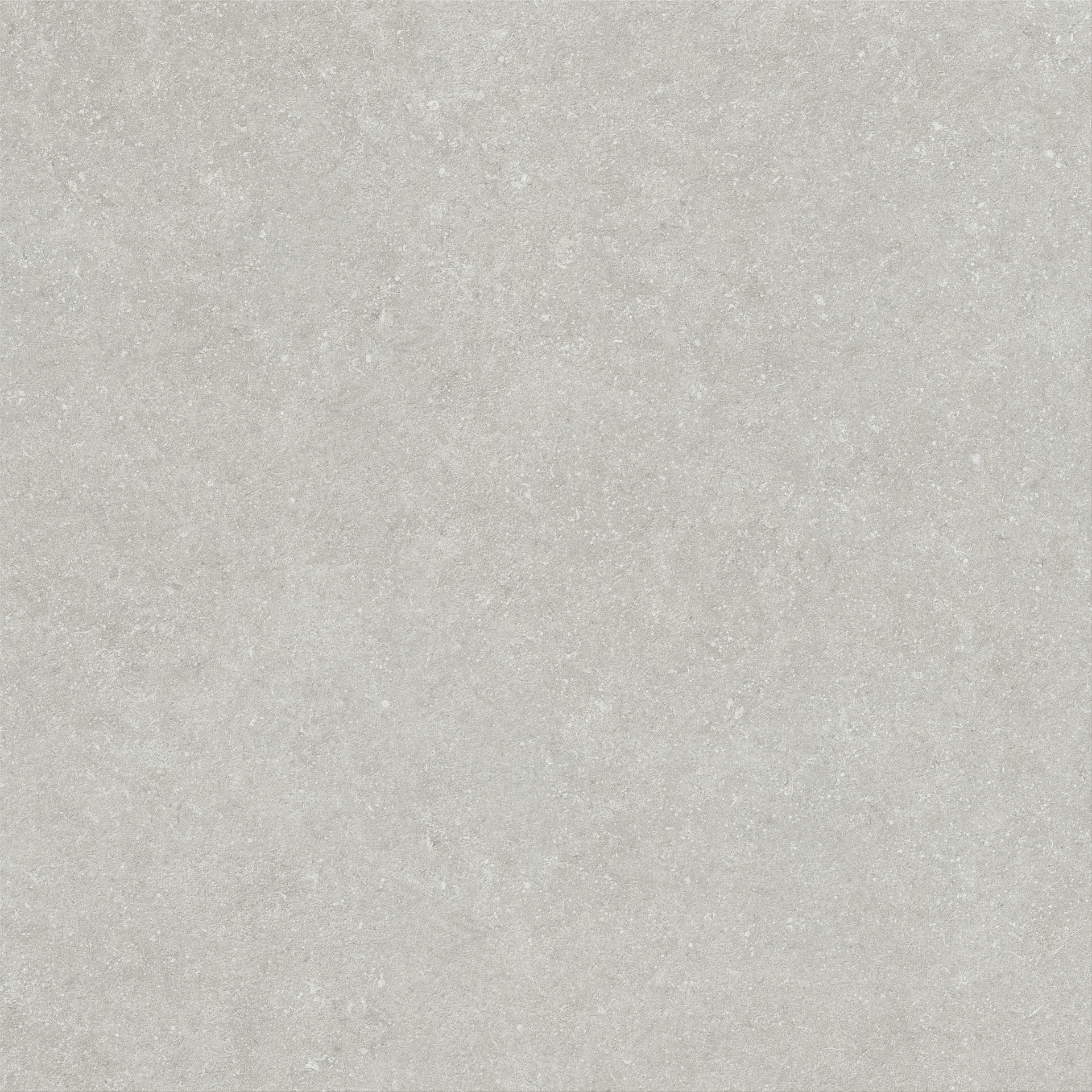
Porcelain stoneware allows you to coordinate floors and walls using the same visual effect, as long as you choose specific products designed for both uses.
Overlaying a new ceramic wall covering over an existing one is possible only under certain conditions. It is therefore important to entrust the assessment to a qualified installer.
